The latest on walkability in SoCal
How Riding Bikes Save your City & Our Planet
- Apr 22
- 4 min read
Los Angeles is such a strange place. It has a mild climate, mostly dry days and lot’s of hidden history. It’s a flat topography yet because of “urban renewal” in the 20th century, our streetcar system was dismantled and replaced with buses, entire neighborhoods razed and wiped off the map to build freeways launching us head first into car-dependency. As roads to move these vehicles became prioritized everything else, sidewalks and bikes were pushed to the sidelines. Being a pedestrian all my life, I’ve taken for granted that sidewalks are basically everywhere. But once you get onto a bicycle you start to realize that this city does not care about you. all you have is a strip of paint to just try and avoid getting doored by the car parked next you or dodge the drivers making a right turn from behind. It’s strange kind of treatment because we have bike paths, dedicated roads just for bikes, think of it like a bicycle highway. Since bikes are a lot smaller than cars, you can fit more of them in a single lane than you can with 3 lanes for cars. These routes when you ride them, feel like shortcuts through the city getting from A to B with no stoplights, no pedestrians or cars to interrupt you. Having a bike let’s you get to places with the speed of a car (e bikes and road bikes) and with the flexibility of a pedestrian (you can also use sidewalks if you need to). For example to get to Expo/Sepulveda it is either a 20 mins walk, 10 mins by public transit or 10 mins by bike.
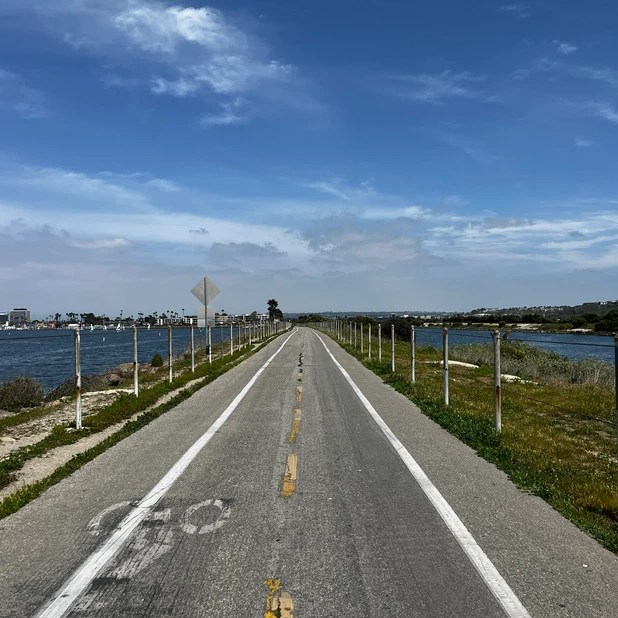
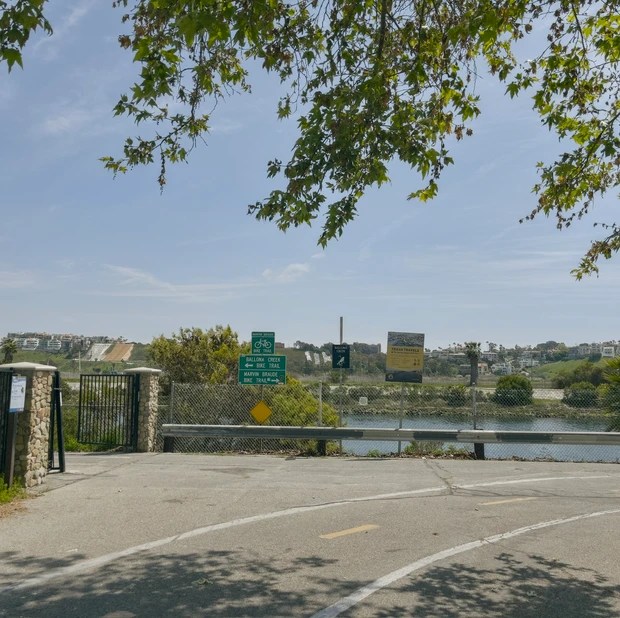
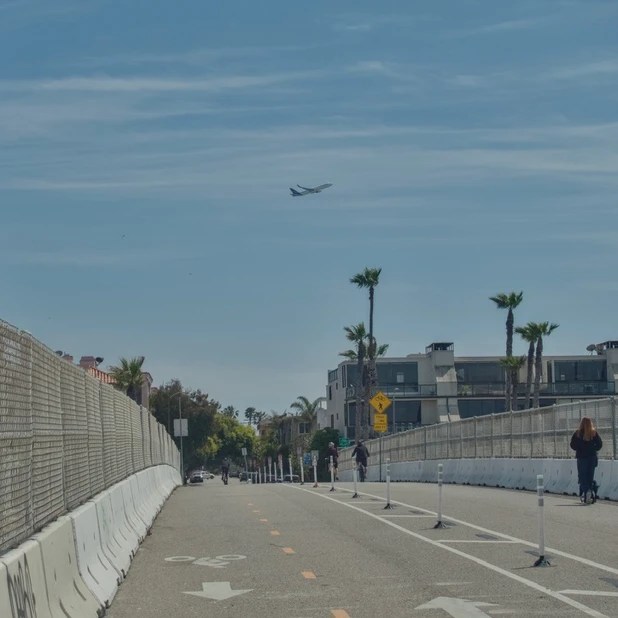
Bikes serve as a good middle ground to get to destinations, like something that’s far by walking, too much of hassle to drive but close enough by bus, biking is a convenient alternative. Public Transit works better tied in with other infrastructure, one of the main reasons Japan is lauded for it’s public transit is because destinations from said stations are walkable in distance or bike able with safe streets, not Main Street stroads with SUV’s going 40. The thing that’s sad about LA is that most people commute less than 5 miles, an bikeable distance the most is that most out of reach destinations are a doable combo with bike + Public Transit. Bikes increase the speed vs walking and shorten the distance. I know that people who use bikes to commute save a lot more time and money because bikes are inherently cheaper and have less maintenance costs, also you don’t need a license to operate one just like walking. Don’t think of bikes as accelerated walking though, because with the proper infrastructure (protected bike lanes etc)
especially E bikes since they can easily match or beat cars in terms of convenience and time. Because a lot of pedestrians including myself would love to get onto a bike if it saves more time but with the current state of free for all, bikes exposed to high speed vehicles, bike riding can’t be done on the most direct routes.
And see, the city (supposedly) wants to invest in bicycle infrastructure, in 2015 many council members along with former mayor Eric Garcetti passed the LA 2035 Mobility plan basically our framework, in planning a more sustainable Los Angeles but the problems are that many neighborhoods (Mar Vista, Venice, Brentwood, Marina del Rey) have opposed these improvements. What’s even worse is Traci Park (In CD11) opposed measure HLA (Heathly Streets LA) a measure presented before voters in 2024 that would force the city to follow the plan they have been ingnoring for so long, citing “costs concerns, and potential loss to emergency response time” which Streets For All debunked as false and that these benefits would carryover and even improve response times. Her predecessor, Mike Bonin was a lot more progressive with transportation, much to the dismay of the wealthier neighborhoods and recalled over 3 times because they didn’t like street safety improvements, but at least he tried. With Metro building so much transportation, there’s gotta be a better way to connect people with these transit options. The LA Times, LAUSD, Sierra Club and LA Forward are among the many organizations that endorsed HLA and helped get it passed. So while Traci Park was busy defending rich neighborhood interests, the westside congestion problems worsened. With the popularity of CicLavia and seeing the expansion of bike infrastructure in Culver City and Santa Monica, all I can do is shake my head in dismay as we are getting left behind. If you build it, people will come. LA is facing an impasse, do you do the right thing and follow your word or scream and protest the changing times and demands of our citizens?
Don’t just take my words for it though, Every so often CicLavia Sundays bring a new script to the game. Miles of LA Streets are closed to Cars and opened to the public to roll, skate, bike and of course walk. This isn’t just car free fun though; A 2016 Study by UCLA and RAND Corporation really highlighted the importance of the car-free events. This research showed that these events aren’t just a pleasant alternative to gridlock; they actually get people moving, with a significant number of participants reporting they would have been completely sedentary if not for CicLavia. Imagine – thousands of Angelenos, who might otherwise be stuck in traffic or on their couches, suddenly experiencing the joy and freedom of biking (or walking) through their own city.
Even more so is the fact that bikes don’t pollute, need a license or insurance to operate, is open to all ages and that there is ample bike parking at most places in L.A. Climate Change is real and will result in dire consequences if we don’t address them.The simply truth is there is not enough space in Los Angeles for everyone to own and operate a car. This is a city not a suburb.
Lastly, Why not try out cycling? It’s fun, cheap and is good exercise. While today might be earth day, please don’t forget that every day is just as important to care and make sustainable choices for the future of our planet. Thanks for reading and go green!
The failed dream of a train to LAX
- Mar 20
- 5 min read
The I-105 or Century freeway is the last urban freeway to built in Los Angeles opening in 1995. The idea for this freeway began from the need to ease east-west traffic in the corridor between the 5, connect LAX and the nearby aerospace sector. Yet unlike the many other freeways that demolished neighborhoods, the 710, 110 and the 10, this freeway had strong opposition from the very beginning. So it landed in the courts, it was appealed multiple times until Judge Harry Pregerson decided to let the project move forward but on very specific conditions. It had to be multi-modal, The 105 precisely legitimized the downfall of freeways and freeway construction in general, people had woken up to the fact that freeways are harmful by displacing residents, being loud and polluting, in LA’s poorest neighborhoods. It was all on purpose.
Redlining is the term used to describe the racist policies towards minorities denying financial services keeping them trapped. It also shapes the way our city is laid out today. Many Black neighborhoods like the now non-existent ‘Sugar Hills’ in Santa Monica were wiped out by freeway construction. Minorities were only allowed to live in certain parts of the city. For example, In the 1930’s a Korean man would not be allowed to lease a home or buy a home in Beverly Hills. The reason why Beverly Hills, Malibu and the Palisades were able to escape freeway destruction was because of the wealthy citizens in those neighborhoods who successfully lobbied against the freeway, preserving their communities while minorities became displaced.
Even today in 2025 the LA region is still choking in the fumes of car dependency. After bill SB 695 was signed 2 years ago, Caltrans finally released publicly accessible data on their freeway expansion projects over the last 5 years starting from 2018. And the most shocking part? Despite the large and wide resistance to more car lanes, Caltrans together with LA Metro built 96% of freeway projects in LA county out of the entire state of California. That is staggering and backwards. If we want to truly address our climate goals it’ll have to start with reducing SOV (Single occupancy vehicle) usage. That is the highest pollutant in the country. Freeway construction still involves eminent domain, wrecking people’s houses, property being taken and worsening air quality and increased vehicle usage where people are living, it’s almost purposely taking the land remaining around freeways and not improving them just expanding them for the sake of it. No real benefits and no mass transit benefits either.
Among transit enthusiasts, it’s often debated whether the green line should have ever been built in the first place. No freeway no green line or Yes to freeway with the green line mitigating that. And it’s hard to decide because Option 1 would take away one of the fastest east west connections in southern LA county taking away a crucial link to the A & K Lines. option 2 is basically justifying freeways as long as mass transit is included in the planning.
The story starts in 1972, more than 20 years before the freeway even opened. A lawsuit was filed on violations of civil rights and NEPA (National Environmental Policy Act). This was the first move against the freeway but fell through, failing to stop it in its tracks. Yet in 1979 a consent degree imposed a multitude of conditions of the freeway’s development. One of those requirements were for a transit line, what would eventually become the green line. See, this is where Judge Harry Pregerson makes his debut. In his ruling, he required housing, public transit and even proposals for public services. His vision, you see was grand in scale and in implementation. Every Station on the green line would have a park and ride lot for commuters to bypass traffic. If only it had gone that way. It was a failure but not a success either just a stopgap measure, still one thing sticked. The Green Line still became the line for commuters optimized for solely that purpose. The problem became that it was a line for people with cars to make life easier not the usual purpose of helping those with without cars gain better mobility. While all stations have massive parking lots none have the commercial or housing space that the judge had called for.
The construction of the freeway with all the lawsuits and opposition created an unsuitable environment for any more freeway construction and with that the end of the freeway era has arrived. The Marina or 90 freeway that was supposed to cut through more swaths of South LA into Orange County never got past the 405 after successful opposition in the 1960’s. This was originally designated as the saluson freeway, yet there is a gap. Along with the Beverly Hills freeway and Reseda Freeways that were never built, these losses put the climate of freeway building who’s goal was too make sure that ‘angeleno’s live no further than 4 miles from an freeway throughout the county.
4 miles?! I live next to a freeway and let me tell you the noise, the pollution and general blight it is, what could have made me radicalized. Because tell me, there’s got to be reasons that places far from freeways like Malibu, Palisades and Palos Verdes are such desirable places to live.
In this day of the year 2025, it terrifies me that they were many more freeways that could have been built with basically no resistance. The government could say “move out cause were building a freeway” here, people’s civil rights and communities all across not just LA but all of SoCal wiped out and ignored. The only solution to traffic is not more lanes, it’s building andincentivizing viable alternatives to driving.
If your wondering what’s next? Good news, the new station called: LAX/Metro Transit Center is looking to open soon! It’s going to be in April or May (please metro).
The K line will be serving Expo/Crenshaw (E Line transfer) down to Marine (Redondo Beach) station creating a north-south connection through LAX.
The C Line, last November took a big step changing it’s westbound terminus from the South Bay curving left into Aviation/Century and soon LAX.
Thanks for reading, I’ve been meaning to write this article for a while and I’m looking forward to a real transit connection at LAX soon. While the green line was built as an consolation prize to the inevitable freeway and there is no denying that it was a flawed solution, it was better than nothing. If you feel your city can do better, don’t be afraid to submit a public comment (or speak) in support or opposition because your voice matters, that’s the defining story from the century freeway.
“The best way to predict the future is to create it.” – Peter Drucker
The Future is Now CRRC HR4000’s
- Feb 12
- 4 min read
Hello and welcome back,
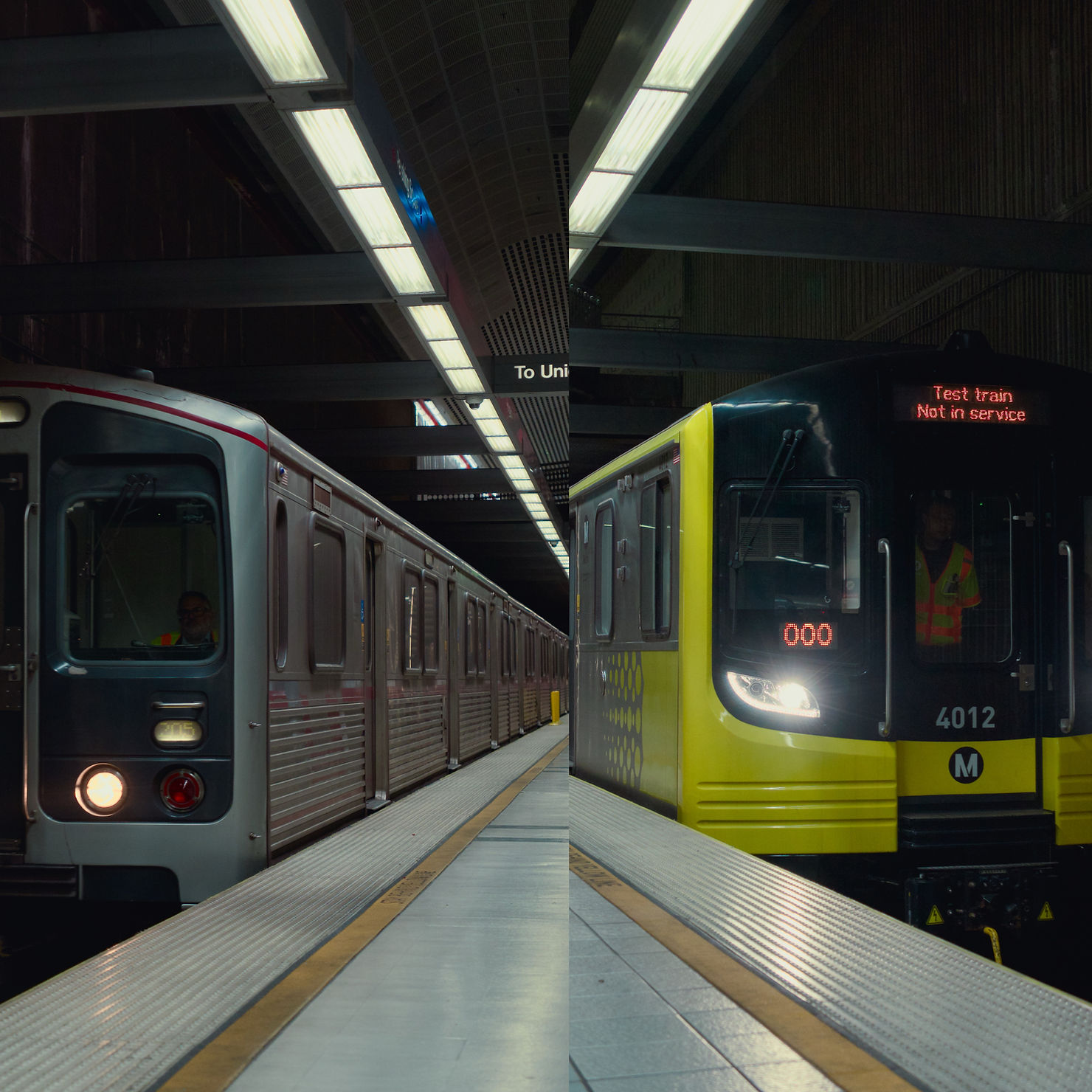
Yes, it’s finally here! The long awaited CRRC’s HR4000’s have arrived to service the D Line. Before we dive in, let’s take a look at the backstory.
Context
LA Metro has a subway system with 2 lines, the B & D Lines. The B is a 14.7 mile line running between Union Station and North Hollywood. This is LA’s first subway line that opened in 1993. The D line is 5.1 mile line that runs between Union Station and Wilshire/Western in Koreatown. It is currently undergoing an (7 mile!) extension to the westside, UCLA and the VA medical center.
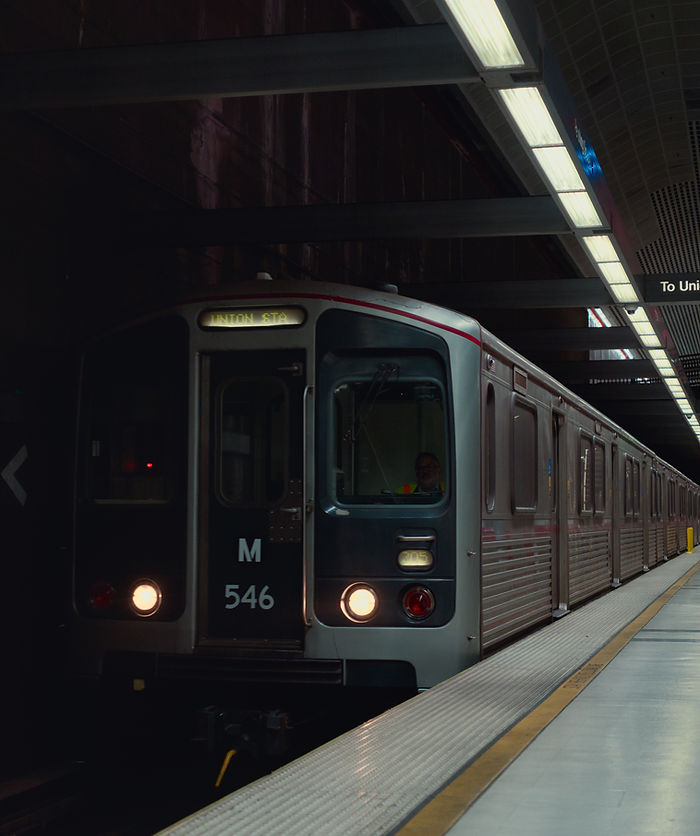
LA Metro runs a fleet of Breda A650s. The cars were manufactured by the Italian company Breda at its Pistoia plant in Italy between 1988 and 1997. This means they are almost 30 years old and of need of replacement. Also Metro needs more trains to run more frequently on the D line extension once opened (The first phase to La Cienega coming this year!)
“Shortly after the groundbreaking of the D Line Extension in 2014, procurement started for new trains to run on the extension.[7] A request for proposals was issued by Metro in June 2016.[8] Two bids were received – CRRC and Hyundai Rotem.[8]
In December 2016, it was recommended that the contract be awarded to CRRC,[9] and the contract was signed in April 2017.[10] CRRC was awarded the contract as they had the lowest price, the “highest technically rated proposal” and a U.S. content of 65%.[11] The contract had a base order of 64 HR4000 cars – 34 cars for Section 1 of the D Line Extension and 30 cars to replace the older Breda A650 trains (cars 501-530) – at a cost of $178 million” Taken from wikipedia
Construction of the trains began in 2021, with the first train entering service only on the D Line on December 20, 2024, due to testing on Section 1 of the D Line Extension.[1]
Features
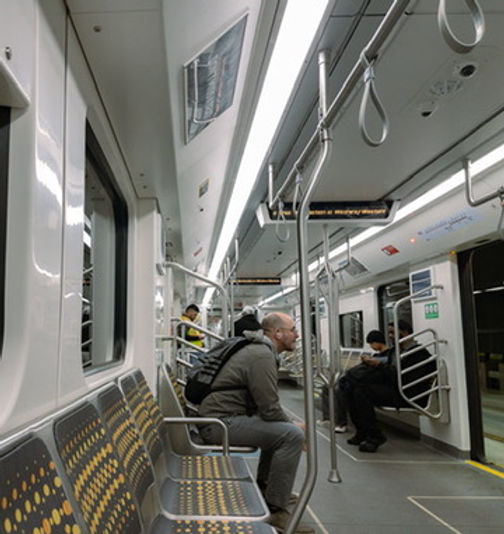
By far the biggest change is the new seating orientation. This is called longitudinal seating, where your back faces the trains windows and is in line with metro systems across the world. This is the standard for most subway systems. While this does mean less actual seating, there is an increase in overall capacity for standing passengers and those with items such as suitcases or bicycles.
Open-gangway. Just like metro’s light rail fleet, (A, C, E, K) these trains are married pairs meaning you can finally move between each (pair of cars, not the entire train like New York City or Tokyo)
Rider Experience
The inside of the train car is much more modern, with a new train smell, more areas to stand, flip up and down chairs give a sleek feeling to it,
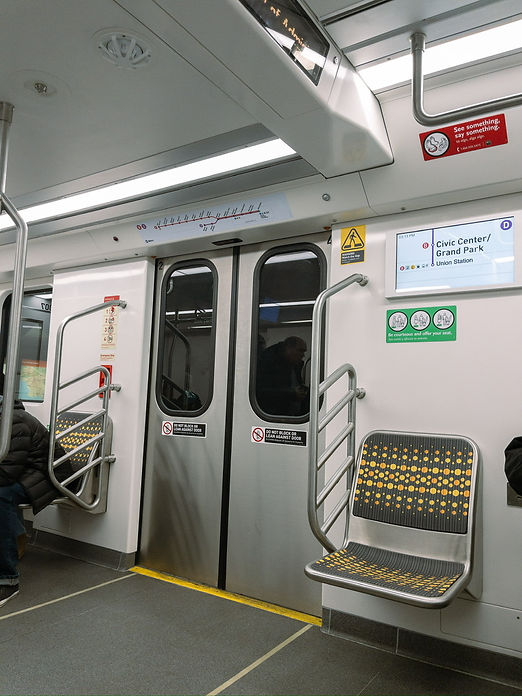
It has proper in train signage, a full color LCD display listing the next stop, dot matrix display for longer announcements and LED color signs for the route map
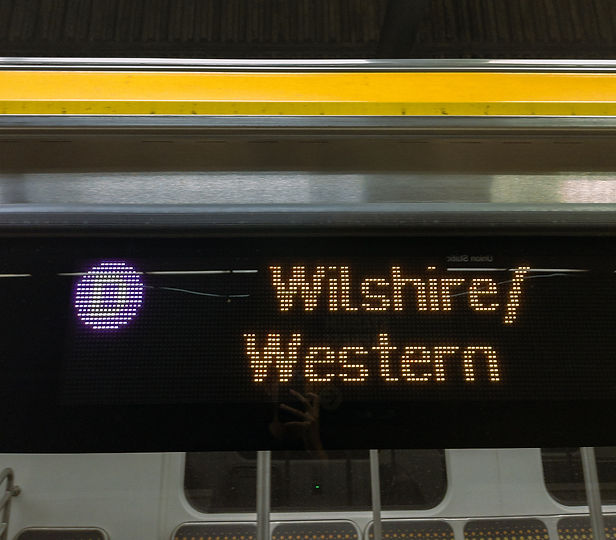
There are full color LED destination signs on the side and Front ends of the trains making it much easier to see what service it is running. This is a much needed improvement compared with the green monochrome flip dot signs, that were really faded and small which were hard to read.
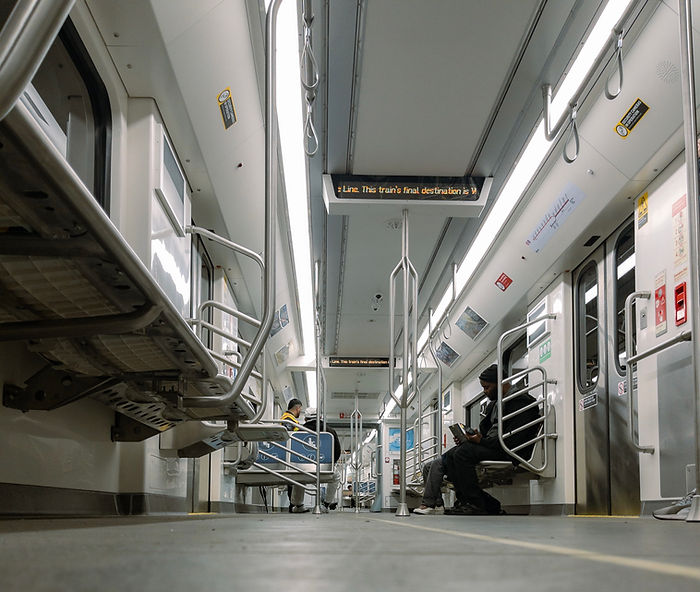
It’s very spacious inside which I enjoy, as it’s a lot easier to move around.
The openness gives it a safer feeling because you can see everything nearby without having to look over your shoulder.
It has a new sound with a ridiculous horn
It has a brand new motor which of course sounds very similar to asian systems and also similar to trains in the Tokyo Metro fleet.
The lighting inside is SO MUCH BETTER, it’s not dimly lit like a movie scene anymore and feels like a proper office.
Their are security cameras now, keeping watch of everything inside
New USB-A charing ports exist if you need a quick charge (though I would only do that as a last resort, not sure about the security of that)
Future
Due to Covid and all the associated delays as well as new federal legislation regarding CRRC only 64 out of optional 218 will be built and delivered and LA Metro has already placed an order with Hyundai Rotem of Korea to build the HR5000 fleet before the olympics and be operable with the existing HR4000 fleet. While many train fans will miss the bredas when their eventual retirement happens, I’m excited for the future of LA’s subway and this upgrade was is only the first part of it. We’ve finally entered the 21st century with these trains and well on our way towards building a world class transit system for all.
Resources
If you’d like to see more of these new trains I highly recommended you check out
If you like to find an HR4000 in the wild for yourself: https://where-hr4k.samuelsharp.com
Use Catenary Maps to track down other transit vehicles in Los Angeles and across the World! https://catenarymaps.org/home
Streetsblog LA: https://la.streetsblog.org/2024/12/20/new-metro-subway-railcars-started-service-today
Eric Brightwell: https://ericbrightwell.com/2024/12/25/nobody-drives-in-la-metros-new-subway-cars-have-arrived-in-los-angeles/
On The Path To Recovery
- Jan 30
- 3 min read
My motto for 2025 is simple:
“The most punk thing you can be nowadays is an optimist”. It’s a thought that keeps me grounded during these tough times and also reflects how I feel about this site.
Through realistic optimism and thoughtful advocacy, we can push for better sidewalks and infrastructure here in LA. That thumbnail of the blue Volkswagen bus standing strong amidst all the destruction perfectly captures the feeling of hope I’m talking about—a quiet resilience.
With that in mind, as the fires begin to die down, it’s time to turn to the questions and answers that will guide us forward
It’s been many heartbreaking weeks for all Angeleno’s as the Palisades and Eaton fires ravished through 1000s of homes, businesses and livelihoods. My heart goes out to everyone who’s been a victim of these devastating fires.
As the Palisades fire’s containment levels creep towards 100, I know many people are wondering about their state of their home. Many important institutions, such as churches and schools, including my own high school: Palisades Charter High School has been damaged by these fires.
We’re wondering when we can go back to these neighborhoods, see our favorite places, local businesses and parks. As the question of rebuilding starts to linger among our minds. I have another question. Where do we go from here?
The path rebuilding will not be an easy one. There are many unanswered questions and unknown variables.
Are we to rebuild again in the same way?
Are we to use fireproof materials in our homes?
Are we to massively rethink how seriously we anticipate the threat of climate change?
The way evacuations were ordered were actually very effective and probably saved many of lives. I know there was a lot of confusing and conflicting information (Mis & Disinformation) all across social media networks about whether the FD was actually defunded or the mayor cut the budget. This video by a climate expert has more information
The causes of the fires are under investigation and I’m going to be keeping a close eye on new reports.
I was in Santa Monica, the other day attending a local night event, dedicated to helping Palisades Charter high school, and the Palisades rebuild.
Climate change is a real threat and we must start to combat these problems. Last weekend, we finally got some rain, I know everyone was overjoyed with this news.
Earlier this week the Palisades area just opened for residents so I’m glad that they were finally able to get back. Whenever it’s possible I hope to see with my own eyes what actually happened. It’s been a tough January for everyone regardless of where you live.
Reconstruction
Concerning the reconstruction, it was quite disappointing that the five county supervisors ignored the supporters of Streets For All. (Item 13-C, sub item 30) could potentially suspend every progressive housing and development state law enacted in the last five years. This would reverse all the advancements achieved in improving housing. Los Angeles is currently in a midst of a housing crisis and has the largest homeless population. Helping residents recover is the highest priority. However we should build for the future, higher density and less car-dependent. Unfortunately, this is backward; we need better infrastructure, and this is not the way.
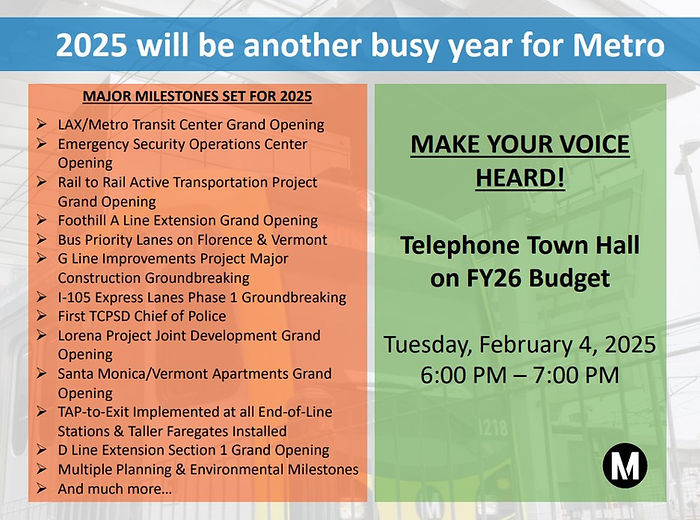
If you’re feeling down or upset at home, I suggest getting involved in the rebuilding efforts by donating or volunteering. A lot of people have had their lives turned upside down, and your help can really make someone’s day better. We as a city showed up for each other and were always stronger together.
Season’s and Service Changes
- Dec 13, 2024
- 8 min read
Happy Holidays!
As high schoolers across the country face finals (the biggest, scariest tests of the semester), Throughout Los Angeles it starts to become colder, especially as temperatures drop here in the Westside.
I’ll quickly mention the Franklin Fire in Malibu that started Monday night. It has burned over 4,000 acres of land and damaged 9 properties. Luckily, no one has been injured or killed by this fire.
Our transportation agencies are cooking up new routes and service changes. LA Metro and Big Blue Bus will both have service changes on December 15th, so let’s take a look at the biggest changes.
For LA Metro, in accordance with their Next Gen bus plan, there are new routes and services being offered.
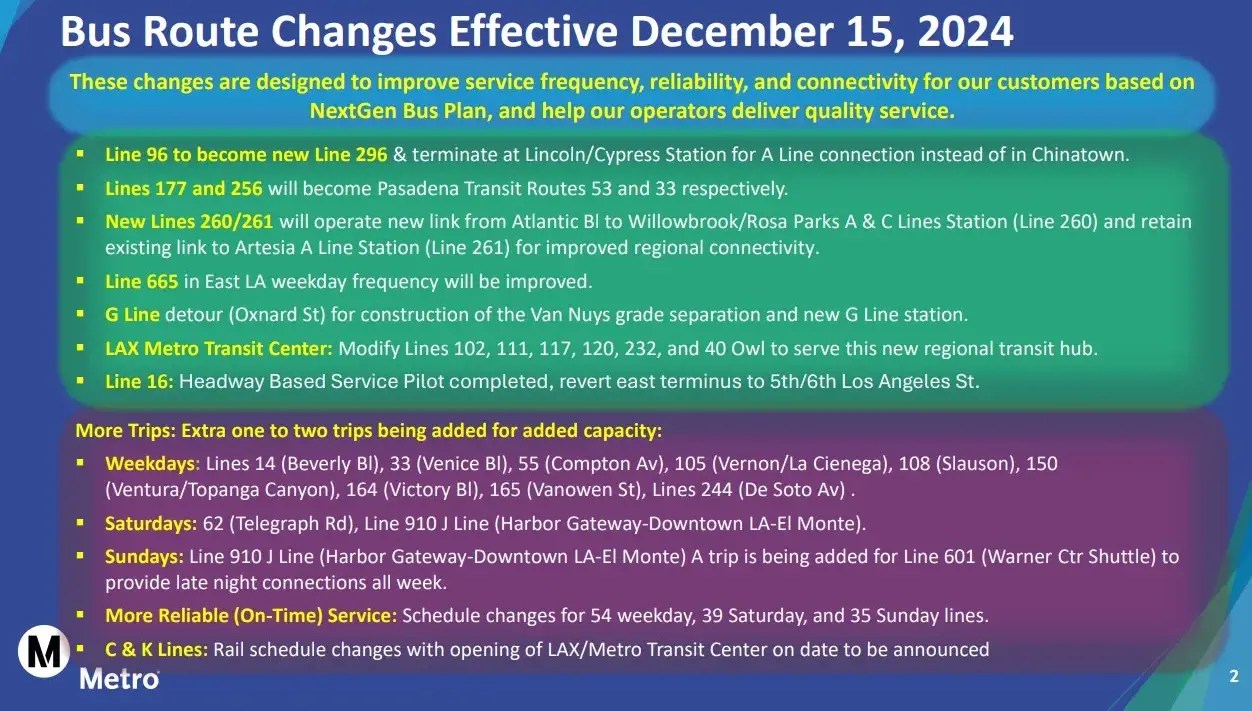
I’m not familiar with the lines in the San Gabriel Valley or South LA, but these seem like improvements, especially the creation of routes 260 and 261, sound good to me.
It’s great to hear that the G Line is finally getting a grade separation at Van Nuys! This will make bus speeds faster, more efficient, and safer, which is a big deal for such a heavily used line. The G Line is notorious for reaching capacity quickly because of how popular it is. It was originally supposed to be built as an extension of the Red (now B) Line subway, but cost overruns and a bad track record—like the infamous sinkhole on Hollywood Blvd—made public trust in subway projects worsen. On top of that, Valley NIMBYs banned subway tunneling in the area, which led to the G Line being built as a BRT system instead of rail. The grade separation is a huge step forward in improving the G Line and making transit better for the Valley.
LAX/Metro Transit Center is a huge deal! It would basically serve as the 7th/Metro Center of LAX, connecting buses, trains, and the airport all in one. For buses, which have long had to be far from the airport at the (temporary) LAX city bus center, they finally get a dedicated transit center built for them with much better rider amenities, because of the higher quality service converging there. It’s also shorter trip times and makes transfers easier. Best of all, i’d be an awesome place for photographers and foamers.
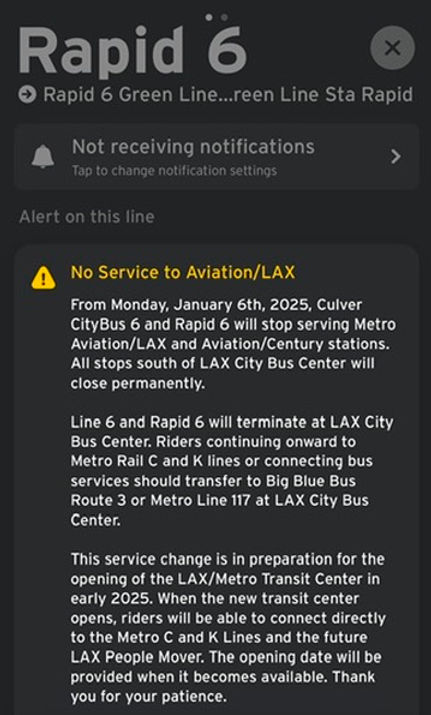
(Culver City Bus Routes 6 and 6 Rapid will eliminate the southern portion of the route beyond LAX City Bus Center, to redirect into LAX/Metro Transit Center Station when it opens. This is happening in January, 2025.)
Onto BigBlueBus
There are implementing the first phase of the five year service improvement plan: Brighter Blue Service Changes 12-15-24
Route 7 on pico blvd will discontinue the Curson Ave (after the intersection) stop and add a new stop at Stanley Ave (before the intersection)
The express 7 route having been in temporary hold will now be discontinued
Route 9 to the pacific palisades will have schedule changes as follows:
Weekdays: Southbound Express trips will operate at 1:22 p.m. and 1:25 p.m. to align with final/minimum day schedules at Palisades High School.
Route 14 on Bundy Blvd which currently connects Brentwood, West Los Angeles, Bundy Station on the E and to Westchester/Veterans Station (K line) in Inglewood now in a big move, cut the southern segment to Culver City Transit Center, connections to Westfield Culver City, Culver City Bus Routes: 6, 4, 3 and LA Metro Bus Routes 108 and 110
Also, my local Route 17, will have mid-day frequencies upped to every 15 minutes! (LET’S GOOOOOOOO!), and it is also operating until much later, 10:20 PM. very nice.
Route 42 will be discontinued. Route 41 is suggested to use instead.
For me personally, this change on the 14th is a huge deal as getting to Westfield Culver City is traditionally a hassle because it is only served by the Culver Bus Routes 6 & R, which are the only routes that go to Culver City from Westside E Line stations such as Expo/Sepulveda. I don’t go to Culver City much just because of the lack of service in buses that serve those areas, which are often infrequent and require multiple transfers. Having a bus that goes to Culver City from nearby Bundy Station, also on the E Line, is great for other Westsiders and Santa Monica residents as this increases accessibility and usability. It is always better to have more routes competing with each other because it provides resiliency in the face of regular disturbances.
For example:
If route’s 6 and 6R were to have their frequencies reduced because of road construction somewhere on Sepulveda Blvd right now, all I could do is either grin and bear it or give up, not being able to complete my task on public transit, forcing me to use Uber and pay almost triple the price. With the new 14 route change, though, things start to change. This is a parallel route that uses a different major boulevard but serves the same destination. This also helps to fuel ridership growth as Culver City Mall has been a desirable destination for a long time. The redundancy creates a network, a strong backbone so that public transit riders don’t get stranded if the main route becomes an unfeasible option. It’s never a good idea to put all of your eggs in one basket. This exact reasoning is why Los Angeles has so many parallel boulevards and freeways, like how Wilshire Blvd and Santa Monica Blvd parallel each other to downtown Los Angeles, both with high-frequency bus routes, the Rapid 720 and Local Metro 4, respectively. RM Transit, also known as Reece Martin Transit, has written a great article that, I think, points out the reasoning that makes some public transit systems so great. (Los Angeles needs layers.)
Recent News in other SoCal Areas
Orange County: OCTA
(Orange County Transportation Authority) is currently building out their four-mile $579 million streetcar located in the cities of Santa Ana and Garden Grove. This is exciting for the areas of downtown Santa Ana for the revitalization of businesses and the connectivity it brings. Because it connects to the nearby Amtrak/Metrolink (insert station name here), it also has great potential as a last-mile connector.
I’m pretty excited to see this happen and can’t wait to go ride it when it opens. It holds novelty as the first return of local rail-based transit to Orange County, after OC voters defeated the CenterLine (modern light rail system) proposal in the 90’s due to high costs and car-is-king mentality. For now, there are no plans in the timelines of both LA Metro, who’s building the Southeast Gateway Line on the same ROW, and that of OCTA to connect somewhere to provide transfer opportunities (they aren’t compatible in infrastructure). The dream of Light rail to Orange County isn’t happening (yet) https://cal.streetsblog.org/2024/12/02/eyes-on-the-street-oc-streetcar-construction-progress
San Diego, in their primary elections, had the opportunity to fund a new transit measure G, but it was (sadly) defeated by rich valley voters afraid of traffic!
In personal notes, I’m disheartened by the results but still hold hope that they’ll try again soon, as they have in the past with the 2018, 2020, and 2022 ballot measures. I have heard that the measure this time prioritized shiny new rail projects more than upgrading existing bus routes, which even the rapid (high quality) ones seem to be peak only, which is abysmal frequency. It also wasn’t very clear in terms of what it offered, and because San Diego is quite conservative compared to other SoCal cities, its voters didn’t really want to raise their taxes for an unknown reason.
The Transit Bandit on Youtube, has an in-depth explainer on the topic.
I have faith that they’ll try again and comeback stronger next time!
Lastly, onto Metro Projects.
The long-awaited (over 10 years!) community outreach for the Vermont Avenue BRT is finally starting with an initial phase with near time bus lanes to open in 2025. It’s the highest ridership bus line connecting multiple metro rail lines and is an important north-south spine for central through south Los Angeles.
Bus lane enforcement, so that buses can actually use the lanes as intended, has started, so we’re taking that space back! https://la.streetsblog.org/2024/10/08/l-a-city-council-approves-on-bus-camera-enforcement-of-bus-only-lanes
Rail transit is expanding in the SGV, no stopping this train!
(further out to Montclair in the 2030’s), anticipated turnover to Metro in early January so that they can complete their mandatory CPUC testing and have it ready for revenue service by the spring, hopefully but likely summer, of 2025!
The LAX/Metro Station opening is immediate and highly anticipated
It should be the most pleasing architectural station in the system, with a much larger station presence than the Aviation/Century station nearby. It has the biggest platform width of any station in the light rail system.
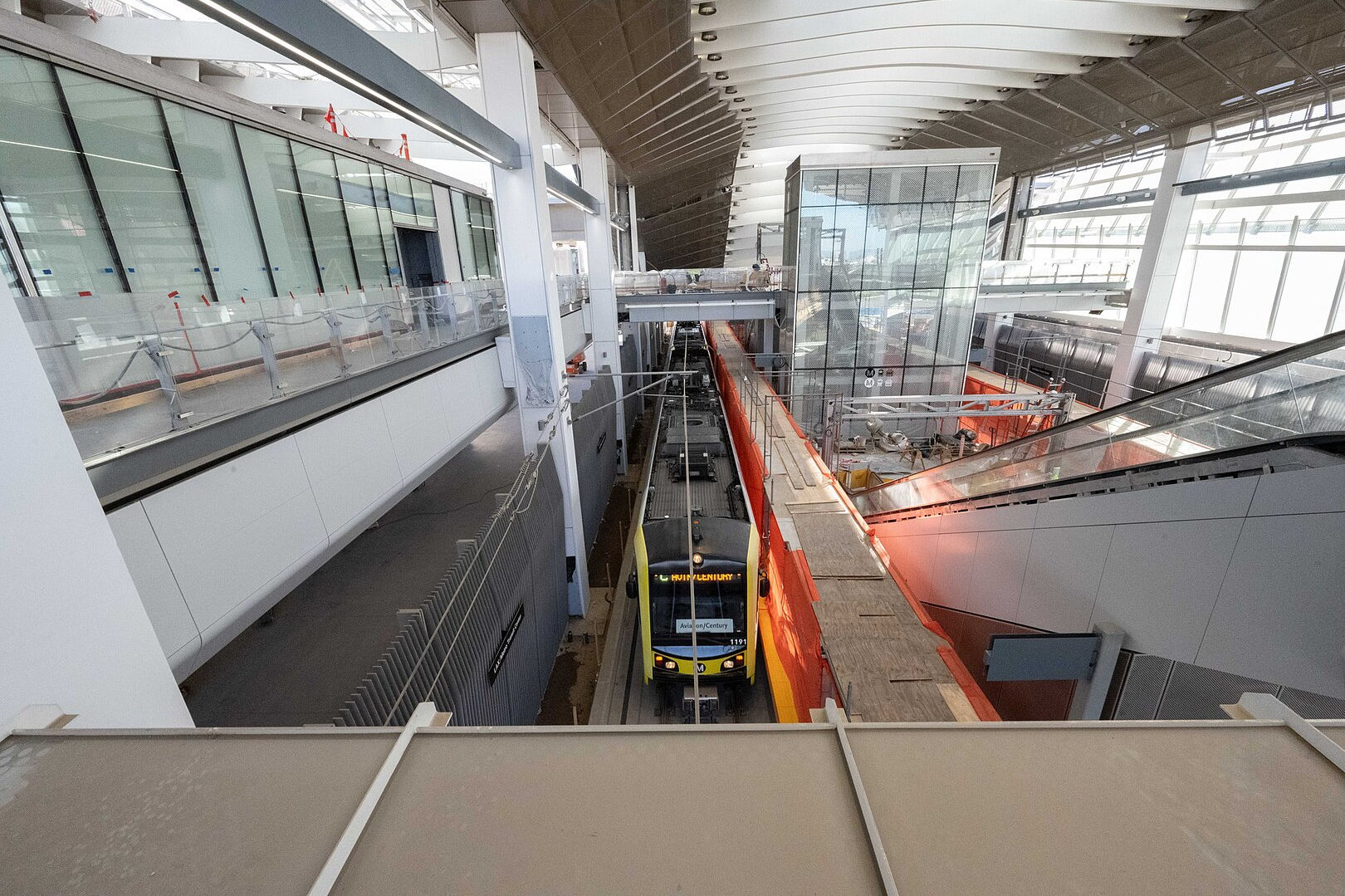
The first phase of our D line extension to the VA is finally set to open in late 2025. I predict the months of October – December 2025 will be when it opens for revenue service. This will extend the D line 3 miles to the border of Beverly Hills and Los Angeles at Wilshire/La Cienega, finally giving the stub of the D line the liberation it needed.
And hey, 25 minutes is the projected travel time between the VA and Union Station when the full extension is complete. That’s Crazy! Faster than by car down Wilshire!
Lot’s more news on the HR4000 Subway Cars
For the uninitiated, LA Metro subway’s B & D lines currently run Breda A650 trains dating back to the 1990s, back when the system first opened!
Think of it like P3010’s for the Light Rail Lines, the universal, modern, and reliable fleet of the future.
I’m excited for the new subway cars because of the new side seating layout and other amenties! https://la.streetsblog.org/2024/12/06/eyes-on-the-trains-new-metro-railcars-in-action
They should be rolling out soon!
The Japanification of our metro system is happening!
(I’ll have to write a article on the first impressions of the subway cars, when I get to ride one!)
In depth, HR4000 Photos and Key Info
Speaking of new trains, it’s time for new fare gates.
We all know crime has deterred a lot of impressionable people from trying our metro system. These new fare gates, along with measures like TAP to Exit, should hopefully spark a resurgence in the metro system, a new era of cleanliness and comfort. I dream.
As the winter progresses and we get closer to the inauguration of the next presidency, there are plenty of ways we can make our local communities stronger. So this holiday season, please don’t hesitate to reach out to your local representative, whether it’s the neighborhood council, your local councilmember, or district supervisor. Your voice will make an impact.
We saw through the wins made in progressive council majorities (Santa Monica, Culver City and West Hollywood) and the major win of HLA (Healthy Streets LA) how much we can do. As Theodore Roosevelt once said “Do what you can, with what you have, where you are.” There’s no better time than now.
Until next time, stay safe, stay warm and see you again in 2025! 🌳
Public Transit isn’t Over, There’s still Hope
- Nov 30, 2024
- 5 min read
Happy Thanksgiving!
This article is different than what I usually write, but…
As the news that Donald Trump of the Republican party was reelected by the American people to become the 51st President of the United States broke,
The fight for a better climate, urbanism, and real transit among many more issues may have been setback and likely delayed, there is still a lot of hope (at least here in California).
After spending hours online for more than three weeks trying to figure out “What can we do?”, I’ve found plenty of reasons why we can still make a positive impact.
Let me start by saying that the next 4 years will be challenging. Metro will heavily depend on the residents of Los Angeles and the State to provide strong support for the continuous development of its projects. The Southeast Gateway Line, which will run from South LA to Artesia (Phase 1), and the ESFV LRT (East San Fernando Valley Light Rail Project) will likely encounter significant obstacles in securing matching funds from the federal government. Local LA YouTuber and Legend in his own right, Nandert, has released a video explaining the workings of Transit Funding in the United States and the issues it’s facing right now.
I’ll be diving into reasons and things that we can do as citizens, this is not a write-up about the state of politics regarding public transit, climate change and Urbanism. Streets for All has a great write-up on the wins accomplished within public transit and other societal needs (in local and state political races). If you enjoy watching documentary-style videos, Nandert’s highly anticipated 2024 Metro Update Video is worth checking out. (Just a heads up, it can get a bit grim at times.)
- Local Politics
There has been a great shake-up to the structure of local politics, with the passage of Measure G, as voters now demand an increase of local county supervisors from 5 to 9 pending implementation by 2030. This will change how things work at the county level (maybe their version of HLA though with a different focus). Also, this will require Metro to change up how the board works (because that is based on the current system that will become incompatible as the new law takes effect).
Measure A
Replaces the previous existing quarter-cent sales tax with a half-cent sales tax for additional funding in public infrastructure and raising money to help homeless individuals.
In a brief view of the wins achieved for progressive voters we have:
Culver City: Buba Fish
West Hollywood: John Erickson (relected as mayor) and Danny Hang
Los Angeles:
In Downtown LA’s (CD14), a crucial seat for the city council was up for grabs. Ysabel Jurado had defeated Kevin De’ Leon in a decisive win, securing 56% and 44% of the vote, respectively.
- Activism
This is something that puts a smile on my face every morning. I see the train on my morning commute, the fight that Friends for Expo put up so that the initially Bus Rapid Transit corridor of the Exposition line was made into a light rail line. It’s not perfect, but it’s a rare example of community activism for a good cause.
StreetsforAll and MoveLA are some of the most powerful community NPO’s that have pushed Los Angeles to follow it’s word, Measure R, Measure M (are the works of MoveLA pushing transit expansion in LA forward, gave Metro the vote of confidence it needed to know that the people are right behind them and want it). Measure HLA (One of the most pivotal moves towards safer streets and complete streets, a vote of reassurance from the citizens that we want it and we demand it.) It’s been way too long and way over enough that rich people in this city get to mess with important infastrcuture projects that scares nobody but them. Ethan Elkind’s book “Railtown: The Fight for the Los Angeles Metro Rail and the Future of the City” has covered this topic in great detail. (If you’re interested in the politics that shaped our transit Renaissance, I cannot recommend this book enough). 404 media has a fun read about the NIMBY reactions to the results of Measure HLA.
There are many online figures on platforms such as reddit and Youtube that spread the message and importance of the urbansit cause. LEJ, DJ Petesake are just some of them.
Nimesh in Los Angeles
He is pursuing being a doctor and has also fallen into the world of LA urbanism quite randomly, like I have. He has covered many topics in-depth, similar to Nandert but with more frequent videos and a more diverse focus.
Nandert
A documentary/filmmaker who has risen in the LA transit space with his legendary once-a-year metro updates, giving us the full picture of everything Metro is doing – the good, the bad, and the horrible. High quality visual animations and voiceover in his videos make him stand out and unique in a space filled with admittedly subpar video production.
Numble Last but certainly not least, the old faithful reliable numble. He has been with us for a long time, much longer than the YouTubers above, and often posts updates and statuses for metro projects (The Metro PR we didn’t know we needed). (He is on most social platforms including Threads, Instagram, and X).
On Reddit, inside the LA Metro subreddit, there have been discussions on the potential impacts of the new presidency, and I find it fascinating to see what others are thinking.
Keeping Hope, No were not going to lose ALL federal funds, Art of LA Metro Stations, Measure G’s Impact on Metro Board,
- The 2028 Summer Olympics in LA
This will probably be the most pinnacle event in LA that marks the decade that was the “2020’s”.
While a lot of our transit expansion and other quality of life improvements are because city leaders don’t want to be embarrassed on the world stage, there is a legitimate force at work to make sure that this fight continues until the day Los Angeles can get it together for once.
2008’s Measure R, the Blue, Red, Purple, and Gold Lines, and Expo (Phase 1) were built decades before the idea of the Olympics ever crossed the minds of city leaders. 2016’s Measure M, approved by voters, was pushed not only as an Olympic expansion plan but also as a “Generational chance for Angelenos to finally get the transit they deserve.”
MoveLA, along with many community organizations, is jumping on this opportunity to create a generational legacy within Los Angeles through their Festival Trails concept, which
There is still so much we can do—not just for transit and the environment, but for the health of our democracy. The next few years may not be easy, but we’ve faced tough times before and come out stronger. With determination and collective effort, we can do it again.
Each of us has more power than we’re often led to believe. Joining local coalitions like MoveLA can amplify your voice and empower causes that matter to your community. Advocacy starts with small, meaningful actions, like sending your local politicians a friendly email to let them know that NIMBYs don’t speak for everyone. Your voice matters, and when combined with others, it can make an incredible difference.
As the saying goes: “Be the positive change you wish to see in the world.”
Until next time, stay safe, stay hopeful, and keep pushing for a better future. 🌳
Clean Air Day & So-Cal Transit Week
- Oct 2, 2024
- 5 min read
It’s Clean Air Day! Free rides across 27 different agencies on TAP today in Southern California.
With it being Clean Air day today on October 2nd, it’s time to talk about it’s history, impact and future. So-Cal transit week launched by MoveLA, for the first time this year also aligns with Clean Air Day.
History
The current structure of the Clean Air Act passed by the federal government starting the 1970’s after the expansion of the personal automobile and freeways caused urban pollution to pile up, dense smog covered over cities and industrial centers making them a worse place to live and the air quality was very poor. Its most recent modification was in 1990. Clean Air Day in California is annually held on the first Wednesday in October.
Most Significant Achievements.
1966: California became the first state to adopt vehicle emissions standards, leading the nation in addressing vehicle-related air pollution .
1970: The passage of the Clean Air Act, with California’s strong advocacy, set a national framework for air quality improvements .
2006: California passed AB 32, the Global Warming Solutions Act, which set ambitious goals to reduce greenhouse gas emissions to 1990 levels by 2020 .
2014: Senate Bills 1204 and 1275 were passed to accelerate the adoption of clean heavy-duty vehicles and expand electric vehicle incentives, targeting air pollution from large vehicles .
2016: SB 1383 was enacted to reduce short-lived climate pollutants, including methane and black carbon, which contribute to both global warming and air quality degradation .
2020: California reached its emissions reduction goal set by AB 32, four years ahead of schedule, marking a major milestone in reducing greenhouse gases .
2025: California aims to have 1.5 million zero-emission vehicles on the roads through its zero-emission vehicle mandate, significantly cleaning up the transportation sector .
WorldWide Impact
Model for Emissions Standards: California’s vehicle emissions standards, adopted in 1966, influenced the creation of similar policies in other U.S. states and countries. The European Union and China have both modeled their emissions regulations in part on California’s standards . California’s strict vehicle regulations have helped shift global automotive manufacturing toward cleaner technologies, as automakers design vehicles to meet California’s requirements to access its large market.
Influence on National Policy: California’s AB 32 (Global Warming Solutions Act), passed in 2006, was one of the first comprehensive laws to limit greenhouse gas emissions. This law has served as a template for national and international climate policies, including elements of the Paris Agreement. By setting carbon pricing mechanisms like cap-and-trade, California demonstrated how state-level initiatives can effectively drive emission reductions .
Advancing Global Clean Vehicle Adoption: Through initiatives like the Zero Emission Vehicle (ZEV) Program, California has not only accelerated the adoption of electric vehicles (EVs) but also encouraged other countries to follow suit. The U.K., Germany, and Japan have adopted EV incentives and mandates inspired by California’s push for clean transportation .
Cap-and-Trade System: California’s cap-and-trade system, launched in 2013, is one of the largest and most successful emissions trading systems in the world. It has linked with other global systems, including Quebec and Ontario’s programs, creating a model for international carbon trading.
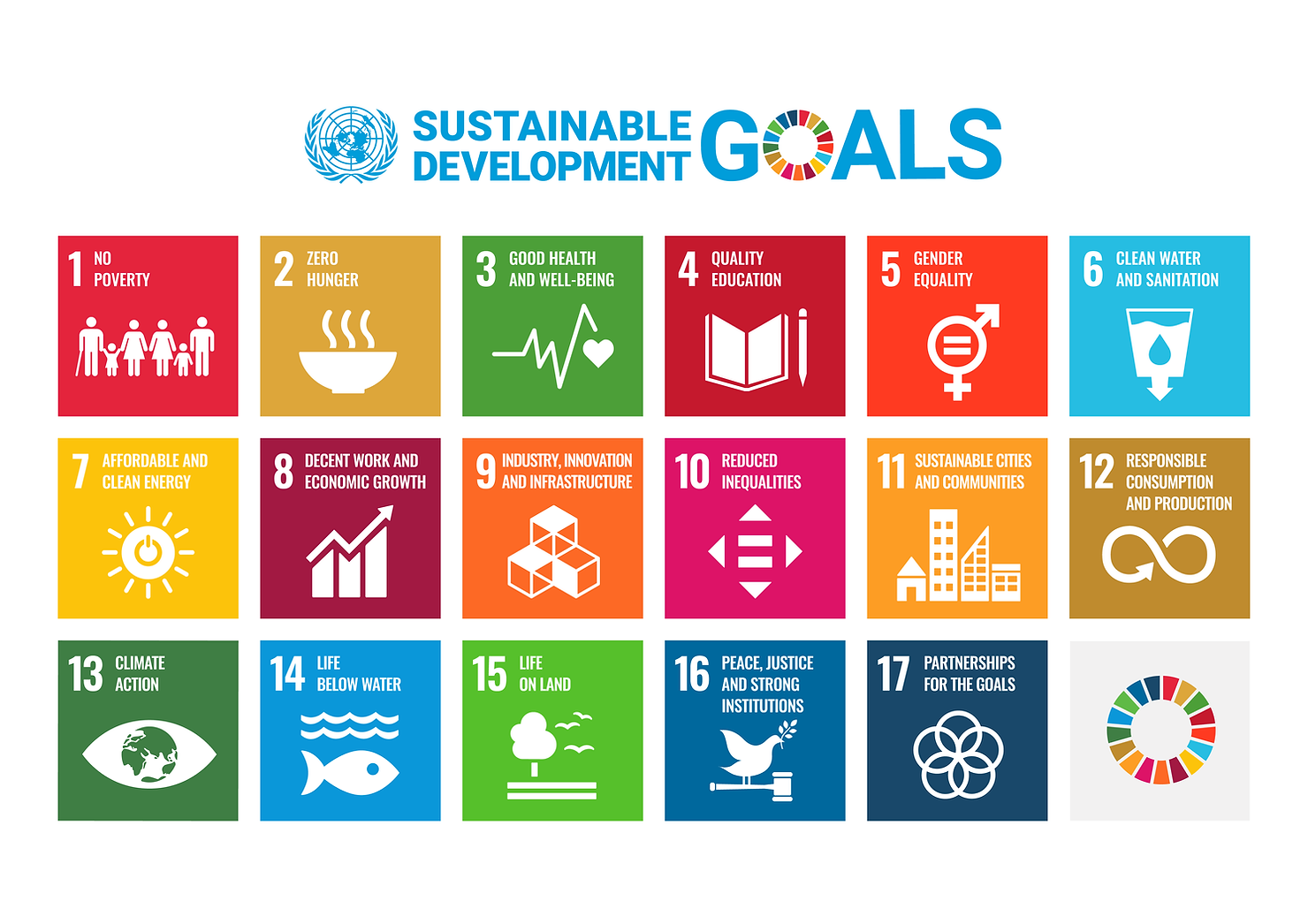
The UN established the International Day of Clean Air for Blue Skies in 2020 with the aim of enhancing air quality and minimizing pollution in our atmosphere. This initiative is aligns with the UN’s 17 (SDG’s) Sustainable Development Goals, which were adopted on September 25th, 2015 to promote a more sustainable world.
During my travels in Japan this summer, I found that the SDG’s initiative was widely present across the country. It is particularly advertised in major cities but is also noticeable in most small to mid-sized towns as well, aiming to raise awareness about a sustainable future. This stands in stark contrast back in America where I had never come across this concept before.
Future
Take a walk outside today and discover something new today. As electric vehicles come into view, autonomous vehicles change the mobility landscape, and other technologies emerge, it is crucial to keep our climate stable and improve our air quality. There is still much more to be done, but California’s advocacy groups are doing an incredible job inspiring other states and the nation to follow in their footsteps. Be glad for the progress being made, and know that together, we’re moving in the right direction.
More on SoCal Transit Week.
SoCal Transit Week is a brand new initiative by MoveLA, with support from many significant organizations including LA Metro, Foothill Transit, and Big Blue Bus. It’s a weeklong celebration of sustainable modes of transportation in the SoCal region, encouraging us to park our cars and take transit instead, not just for the environment but also for a healthier lifestyle.
News This Week
Though it’s only Wednesday there is a lot going on this week!
Numble On X
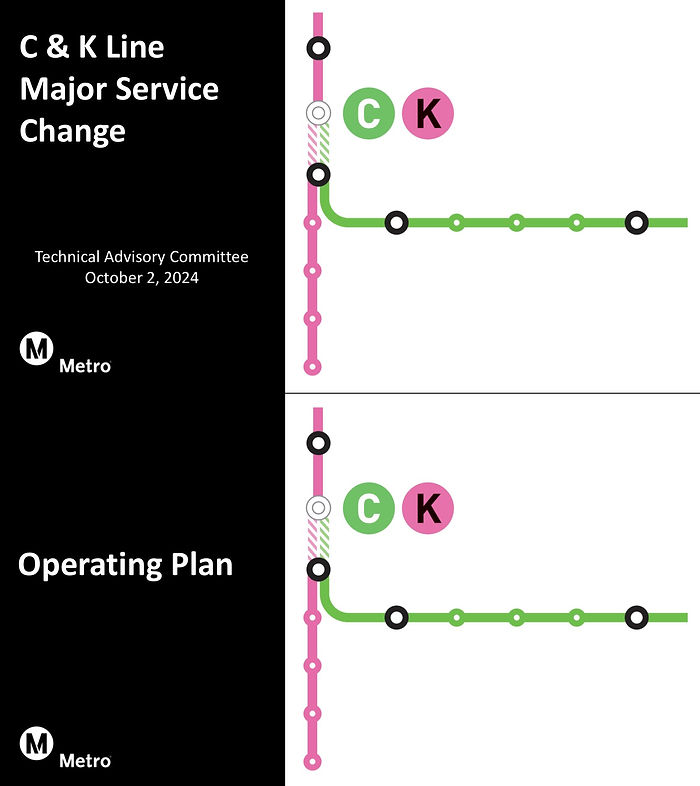
October 2024 LA Metro update on C/K alignments and LAX/Metro Transit Center. Limited pre-revenue service started. Pre-revenue service for ~8 weeks starting in early October. New alignments and LAX station would open afterwards with CPUC approval.
New Metro Rail & Busway Maps Incoming
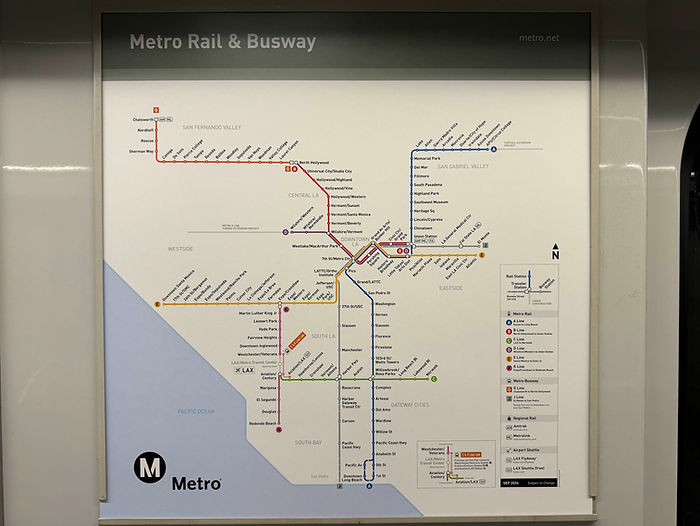
It looks like LA Metro is installing new maps to it’s busses and rail cars (September 2024) edition introducing the new C& K line operating pattern, (the not open Aviation & Century Station as open) and teasing the soon to happen opening of LAX/Metro Transit Center sometime later this year..
New TAP To Exit Data from Downtown Santa Monica E line Station after 1 week (September 20th)
After reporting about the implementation of tap to exit a couple of weeks prior, Metro has collected new data showing the effectiveness of this program. I myself, as a rider, have found a noticeable reduction in unhoused individuals, better cleanliness, and better experience riding the system.
“On Sept. 20, Metro reported to the Daily Press that in its first week of TAP-to-Exit enforcement, reported incidents involving harassment, physical fights, drug use and vandalism dropped around 45% on the entire Expo line. The program, the organization states, has benefits from Downtown Santa Monica all the way to Atlantic Station in East Los Angeles…
…Though the first week was a success, the mass lowering of disturbances could be partially attributed to extra personnel from the Los Angeles County Sheriff’s Office. Coming out in droves to take riders out of train cars at the station, a video from Santa Monica Closeup shows groups of LA County officers patrolling the Metro stop platform…
…Now at two locations, Metro intends on serving more lines with TAP-to-Exit in the near future.
“The TAP-to-Exit data is showing that we are delivering a clear and safer ride in Santa Monica,” Metro DEO of Customer Experience Stations Stephen Tu said. “This is consistent with what we saw at North Hollywood, where 9 in 10 surveyed riders agreed. We look forward to expanding this improvement to more stations over the next year.” “
Lastly, for those nostalgic about the older train models, Siemens P2000s refurbished by Alstom are finally returning to the A line after a hiatus, further becoming a point of interest for foamers (train enthusiasts). The A line now has three different models of Metro Rail: the 90s Siemens P2000, the 2000s Ansaldo-Breda P2550, and the 2014-2020 Kinkisharyo P3010.
Until next time stay tuned and stay cool! 🌳
[Mini-Post] California Urbanist Bills 2024
- Sep 29, 2024
- 4 min read
Big news this week rounded the urbanist news threads, with the signing of the 3 main bills: AB-2503 by Asm member Alex Lee, AB 3177 by Asm Wendy Carillo and SB 960 Sen Scott Weiner.
AB-2503 exempts rail electrification projects from CEQA.
So (I belive) this bill does not exempt building new electrification projects such as new LRT lines or HRT lines. This bill does however exempt railroad electrification on existing ROW (Right of Way) and building new railroad sidings (so adding a second track where there is currently single track helping to increase service levels and reliability on lines.) are exempt from CEQA requirements. That Metrolink of ours should maybe take advantage of this instead of dragging their feet and crying about it.
“CEQA, until January 1, 2030, exempts from its requirements certain transportation-related projects if specified requirements are met, including that a local agency, as defined, is carrying out the project and that the project will be completed by a skilled and trained workforce, as provided. CEQA includes within these exempt transportation-related projects a public project for the institution or increase of bus rapid transit, bus, or light rail service, which will be exclusively used by low-emission or zero-emission vehicles, on existing public rights-of-way or existing highway rights-of-way.”
AB-3177 Ends road-widening mandates for new housing
Governor Newsom signed a bill from Wendy Carrillo – A.B. 3177 – which will prohibit municipalities/agencies from requiring a development to dedicate land to widen a roadway if the purpose is to achieve a higher “level of service” for cars or to “achieve a desired roadway width.” Local government could, if needed, still require land dedication from a proposed development, but would have to meet strict rules and back it up with “substantial evidence.”
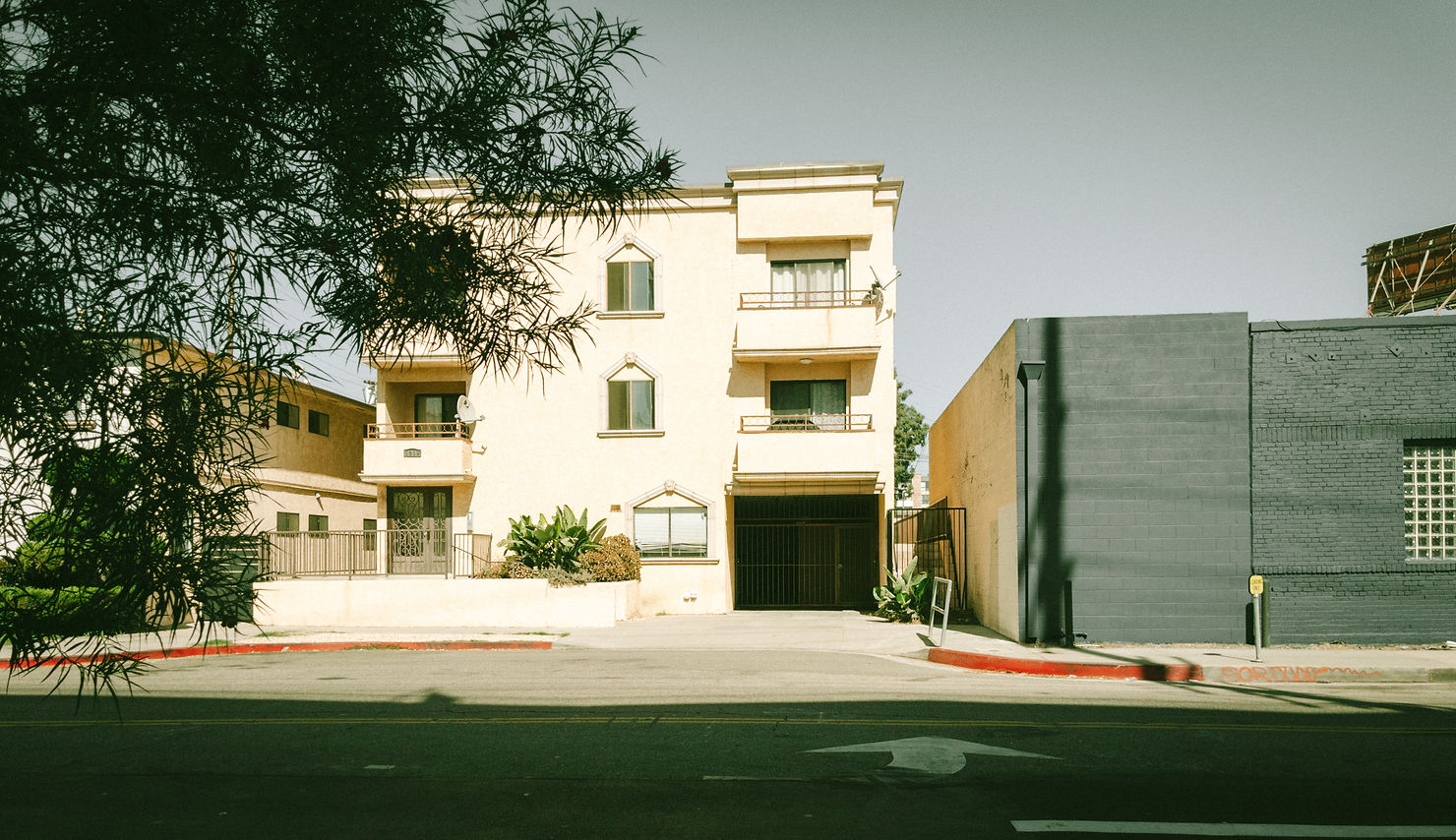
A.B. 3177 also specifically names the city of Los Angeles and its practice of “spot widening,” whereby new developments are required to widen the road in front of their parcel. The city was working on its own ordinance to end automatic road widening requirements, but, at least for housing, part of that ordinance appears moot now. A.B. 3177 applies only to housing, and the problem in Los Angeles is more widespread, as any and every development has been subject to spot widening rules.
This will help to solve the housing crisis in Los Angeles, saving developers tens of thousands in costs, making roads safer, and providing better pedestrian experiences. The photo below showcases why.
SB-960 Implements complete streets
Yesterday, Governor Newsom signed Senator Scott Wiener’s Complete Streets bill, S.B. 960. This is a huge victory for proponents of safe and equitable streets, and the result of many years of advocacy. It’s the third such bill introduced by Senator Wiener, after pushback from Caltrans and Newsom’s veto of a previous version a few years ago despite overwhelming legislative support.
S.B. 960 requires Caltrans to prioritize road improvements for pedestrians, bike riders, and public transit users whenever it performs maintenance or does road work. That can include sidewalks, bike lanes, bus-only lanes, comfortable and accessible public transportation stops, frequent and safe crosswalks, median islands, accessible pedestrian signals, curb extensions, narrower travel lanes, and more. The bill also requires a faster and more transparent decision process for interactions with local jurisdictions who want to make safety changes on state highways that run through their communities.
This is quoted from cal.streetsblog’s article on the passage of this bill. It really is a big deal because it advances the much-needed implementation of complete streets on Caltrans-owned streets. In Los Angeles most notably, State Route 2 Santa Monica Blvd and PCH (state route 1) from Santa Monica to Malibu. On Santa Monica Blvd, Caltrans is asking for feedback on a complete streets implementation outreach survey. There are also city documents (in Mobility Plan 2035) stating that LA Metro will create bus-only lanes on Santa Monica.
This is a step closer to a more cooperative Caltrans that wants to help California build lasting and high-quality infrastructure, instead of the gloomy present day of firing the one person who was making change and being hostile towards local city governments (when it comes to anything other than highway widening), making it a hassle to work with them.
To Conclude
There are many exciting things on the horizon, including the signing of a couple more bills by Governor Newsom, So-Cal Transit Week in October (Clean Air Day), and the hopefully November opening of the last 1-mile extension to LAX with the K line connecting the region to LAX with a rail line, finally giving the C line the justice it deserved so long ago. It’s an exciting time to be a transit advocate in Los Angeles and California; change is happening!
Until next time stay tuned and stay cool! 🌳
information provided by streetsblog.cal and streetsforall
3rd Places, Somewhere in Between
- Sep 1, 2024
- 5 min read
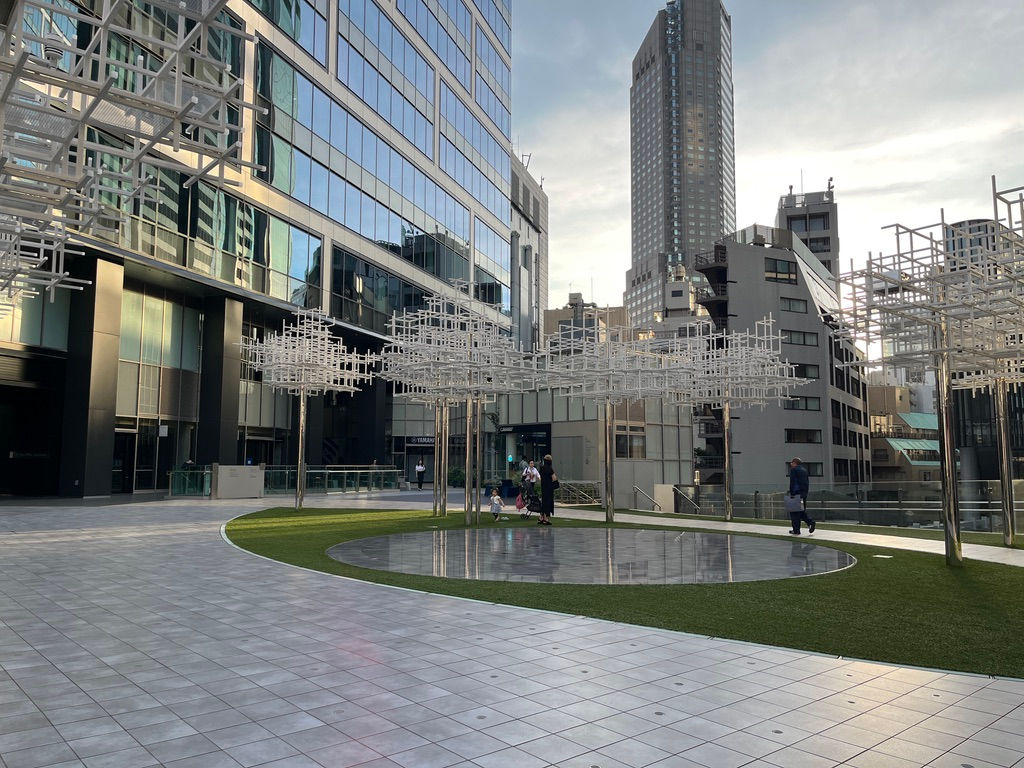
A place not work nor school, a place that you can exist but still enjoy the magic of 3rd spaces.
Many of us experience a soul-crushing commute when going to work or school, feeling lonely as we listen to the radio and mentally curse at the “damn traffic.” This is a common commute for many, including myself when traveling up and down PCH, which can be brutal. While I could obtain my driver’s license, the time saved and reduced stress are not significant enough for me to obtain it. If you’ve ever wished for a place that is free and open to just exist in, 3rd spaces might just be that!
A third space is defined as a physical location outside of home and work where people can gather, converse, and relax. The term was coined by urban sociologist Ray Oldenburg in the 1980s, who believed that third places are essential for a functioning civil society.
Due to the car-centric lifestyle and urban expansion in the United States, cities like Los Angeles face significant challenges with density. By examining the density map of LA’s west side (https://storymaps.arcgis.com/stories/34f75a6be70f4cf0ab9db4a37812ad12) (This is a draft plan for an new 2024 density plan, not even the old one.)
We can see that only a small portion is designated for mixed use. Sawtelle Blvd, only some of Santa Monica Blvd and some of Olympic Blvd. Most of it is low -medium residential with pockets of industry at the ends. The west side is gradually attempting to increase its density, but it is encountering strong opposition from (certain) communities and has remained stagnant except for areas near major boulevards and the Metro E Line. Despite the development of various infill projects following the extension of the E Line to Santa Monica in 2016, the overall landscape of the Westside has not seen significant changes (yet)
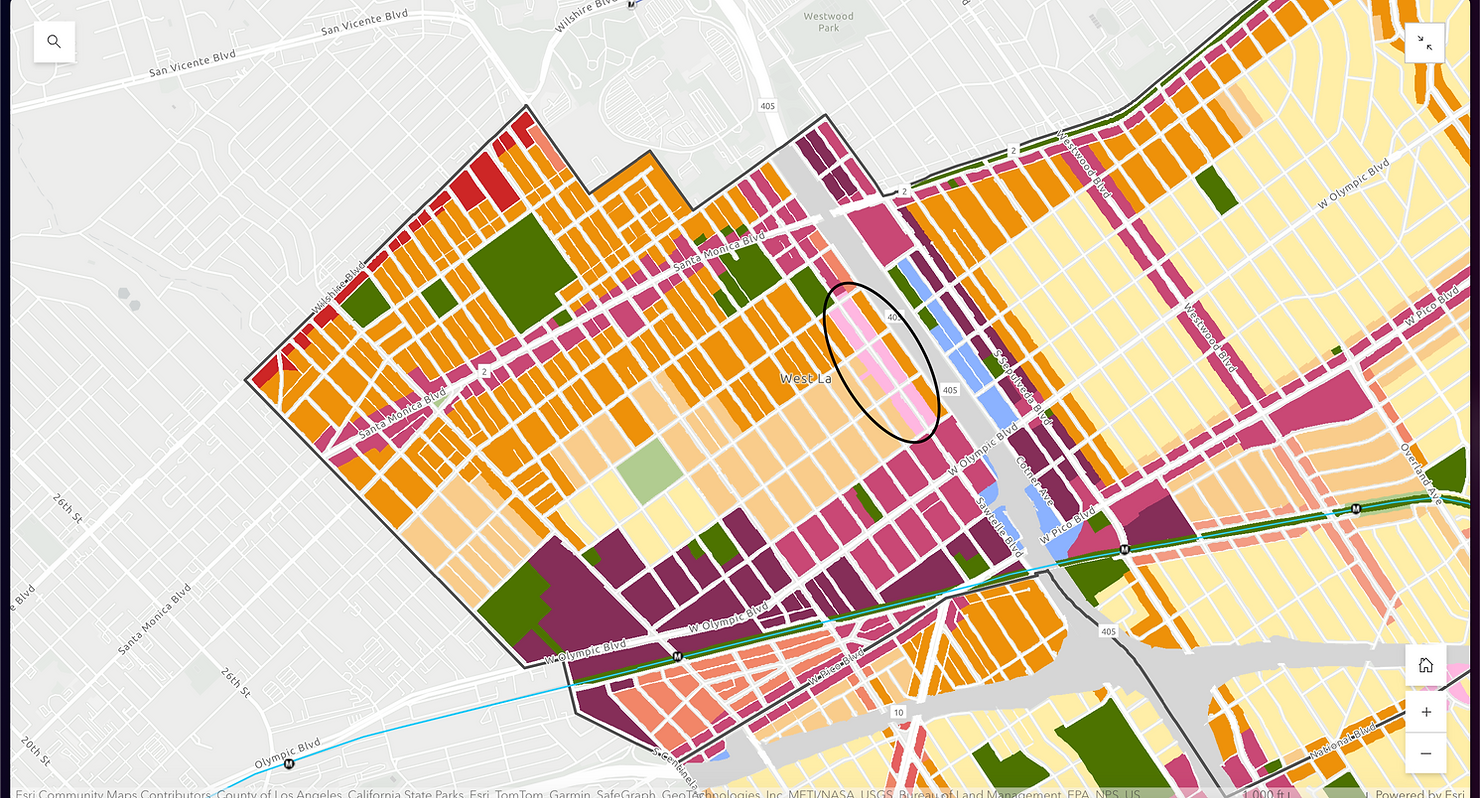
Only Wilshire blvd is dense as a spine for the westside to downtown. In West LA there will be 3 mixed use corridors, the American approach of segregating zoning areas has negative implications for the growth of organic businesses and communities, as highlighted in a video discussing Japan’s zoning regulations by LifeWhereI’mFrom here . Most of this density plan is an orange meaning medium density housing and purple shades are that of industrial zoning.
One big thing about Tokyo is that even though it’s a city, you can still see the suburbs close by. The polycentric nature that Tokyo has makes it easy to incorporate suburbs (such as Yokohama and Omiya into the urban fabric). There are pocket parks built in as infill, small Zakkyo alleys, and the remnants of old Tokyo (Edo) all around. In Japan, as well as many other countries including Germany, the US, and Russia, public plazas exist as places where people can gather and relax in a public space. The key here is public space for public use and benefit connected by a good transportation system. For example, as railway companies continue to densify, the area around Shibuya, Shibuya Station opened up their “new south exit” on 7-21-24, a key step towards a more vibrant Shibuya.
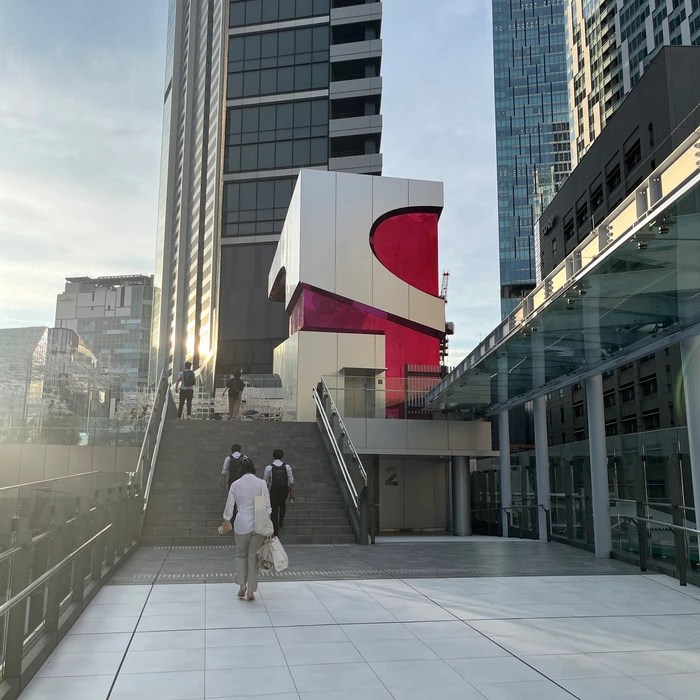
Along with it, a new commercial complex called Shibuya Sakura Stage opened, adding another small plaza/park to create more open space as well as more commercial activity. Again in Shibuya there is a park called Miyashita Park that was opened in 2020 bringing foot traffic, things to do and open space up top as a park all in one adding to the charm of Shibuya. This is great for riders because life became more convenient with the opening of the gate and the addition of more things to do and see. This is an example of a new third space being created to make a better city. Other 3rd spaces naturally exist within railway stations such as inside Shinjuku and Takanawa Gateway stations.
You might be wondering where you can experience this in Los Angeles or the US.
In Los Angeles, our rich history with the red car trolleys can be found in neighborhoods such as Culver City, Silverlake, Marina Del Rey, Venice, Mar Vista, Sawtelle, the San Fernando Valley, Central LA, Long Beach, and many others. For instance, Marina Del Rey, although part of the now defunct red car system, is connected to UCLA by Big Blue Bus 18. These neighborhoods boast charming shops, bustling streets, and a vibrant atmosphere.Although not traditional parks, these are considered as third spaces that allow everyone to appreciate their city and neighborhoods. While not specifically focused on the concept of third spaces, this excellent video by Nimesh in Los Angeles raises an intriguing question: should Los Angeles be designed more like a mall?
A decade ago, Sawtelle Blvd had a notably distinct landscape compared to its present appearance. The area was predominantly characterized by residential shops, light industry, and houses lining the street. The first real sign of a booming industry was with the opening of Tsujita in 2011. There is a great book by Dr. Jack Fujimoto called “Sawtelle: West Los Angeles’s Japantown” sold online or at Giant Robot. Located on Sawtelle Blvd, this neighborhood excels at being an unplanned third space, offering a mix of homes, shops, restaurants, and more. In 2015, the city of Los Angeles officially recognized this area as “Sawtelle Japan-Town,” and it has continued to expand ever since.
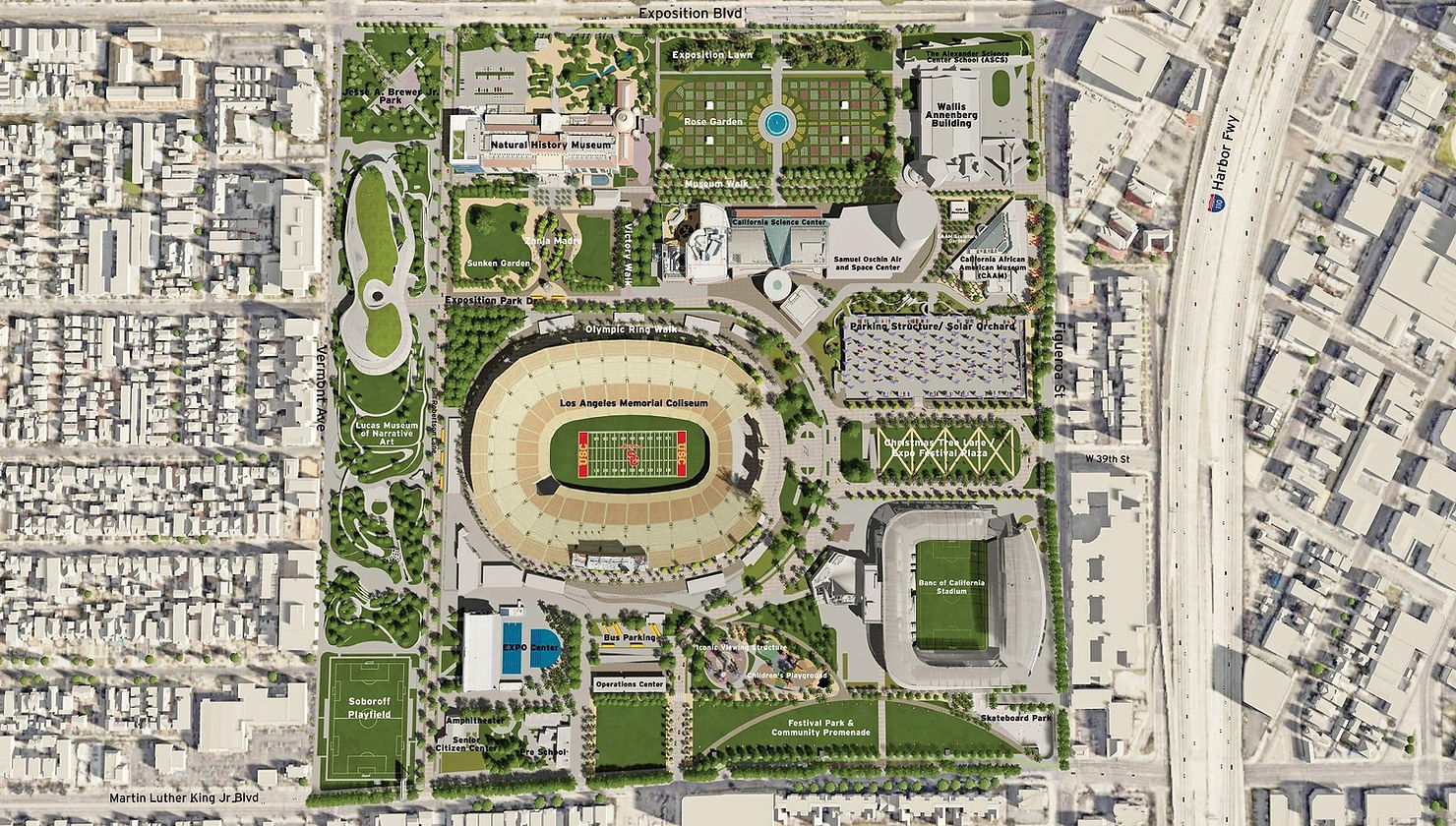
As the Olympics approach Los Angeles in four years, significant advancements and infrastructure developments are emerging throughout the region. Among them is the announcement of a $352 million investment in Expo Park to enhance facilities, including the expansion of the Science Center and the completion of the under-construction Lucas Museum of Narrative Art, set to open in 2025. The Memorial Coliseum will be the first stadium in the world to be used 3 times in an olympic event! (1932, 1984, 2028)
- In other news, Inuit Dome opened a couple of days ago marking one big project complete. Inglewood is working on the people mover to connect to the people mover (more in a later article).
- In Westwood, a new public plaza called Broxton Plaza will be one block between Weyburn and Kinross. This is great since Westwood village is already a great walkable space providing better public space to all on the Westside!
- Metro’s great blog “The Source” got an makeover today. You can read all their old articles at the new legacy.thesource.metro.net website.
- Metro’s Budget for fiscal year 2024-2025 was released a few days ago and you go read it at The Source to learn more.
Taken from Reddit - City of Los Angeles Department of Public Works Survey Questionnaire: Citywide Public Right of Way (PROW) Inventory and Condition Assessment PilotThe City is conducting a Pilot Inventory and Assessment of the City’s PROW pedestrian facilities, which shall include, but not be limited to, sidewalks, crosswalks, and curb ramps (Project). Through this effort, the City’s team will:
- Research inventory and assessment technologies, existing assessments by other entities, and the City’s current asset management programs.
- Coordinate input from public and private stakeholders and City departments.
- Identify pedestrian facilities to be inventoried and evaluated
- Determine representative pilot locations across diverse City areas.
- Conduct inventory and assessment of facilities at pilot locations.
- Analyze data compatibility with existing City systems.
- Recommend a uniform asset condition rating strategy and ongoing data maintenance mechanism.
- Report on the scope, schedule, technologies, and estimated cost for a citywide inventory and assessment.
This Pilot Phase will contribute to the City’s future comprehensive planning and organization of PROW related strategy and funding. It will also contribute updates to the City’s Self-Evaluation and Transition Plan, required in compliance with disabled access laws and regulations.
Thank you for participating in this survey. Your feedback is crucial for developing a comprehensive approach to pedestrian facility construction, repair and maintenance across the city. Your input will help in prioritizing repairs and improving pedestrian facilities within the PROW.
Let them know what we need here:
There are a lot of other things I would like to talk about, but alas, that is about it for this article. I really appreciate you reading this and hope to see you again here soon! 🌳
Mini-Post [TAP TO EXIT) DTSM
- Aug 26, 2024
- 3 min read
Today, Metro’s Blog the source announced that TAP-TO-EXIT is coming to Downtown Santa Monica station on September 3rd! https://thesource.metro.net/2024/08/26/tap-to-exit-begins-at-downtown-santa-monica-station-on-tuesday-sept-3/
Context:
This is an intivative launched in May aimed at reducing crime and increasing riders safety, below is a quote taken from the metro article explaining more in detail.
“We launched TAP-to-Exit at the B Line’s North Hollywood Station in May. In the time since, we’ve seen a notable increase in the number of customers paying fare, as well as a drop in crime and other issues reported by riders via Metro’s Transit Watch app.
We surveyed customers at NoHo Station since we launched the pilot and found 91% reported feeling the station was cleaner and 86% thought it was safer.
The expansion of TAP-to-Exit is part of several public safety initiatives approved by the Metro Board of Directors at their July meeting. After TAP-to-Exit is implemented at Downtown Santa Monica Station, we’re going to expand the pilot to our other end-of-line stations. Dates for that expansion are to be determined. Please stay tuned to The Source and our social media for updates. “
The brief:
• TAP-to-Exit Launch: Introduced at the B Line’s North Hollywood Station in May.
• Impact on Fare Payment: Notable increase in customers paying fares since the launch.
• Crime and Issues: Decrease in crime and other issues reported via the Metro Transit Watch app.
• Customer Feedback:
• Cleanliness: 91% of surveyed customers felt the station was cleaner.
• Safety: 86% of surveyed customers thought the station was safer.
• Expansion Plans:
• TAP-to-Exit will be implemented next at Downtown Santa Monica Station.
• Further expansion to other end-of-line stations is planned, with dates to be determined.
There will be 3 more pilots that will be expanded soon!
We’re expanding our Elevator Open-Door pilot program from 21 elevators to 57.
We’re going to expand our smart restroom pilot program at up to 64 stations over the next four years.
We’re going to pilot weapons detection systems at two rail stations starting later this year.
The article has a lot of interesting details and news that would be outside the scope of this mini post to cover, so please go give a read and maybe help us make a better metro for all.
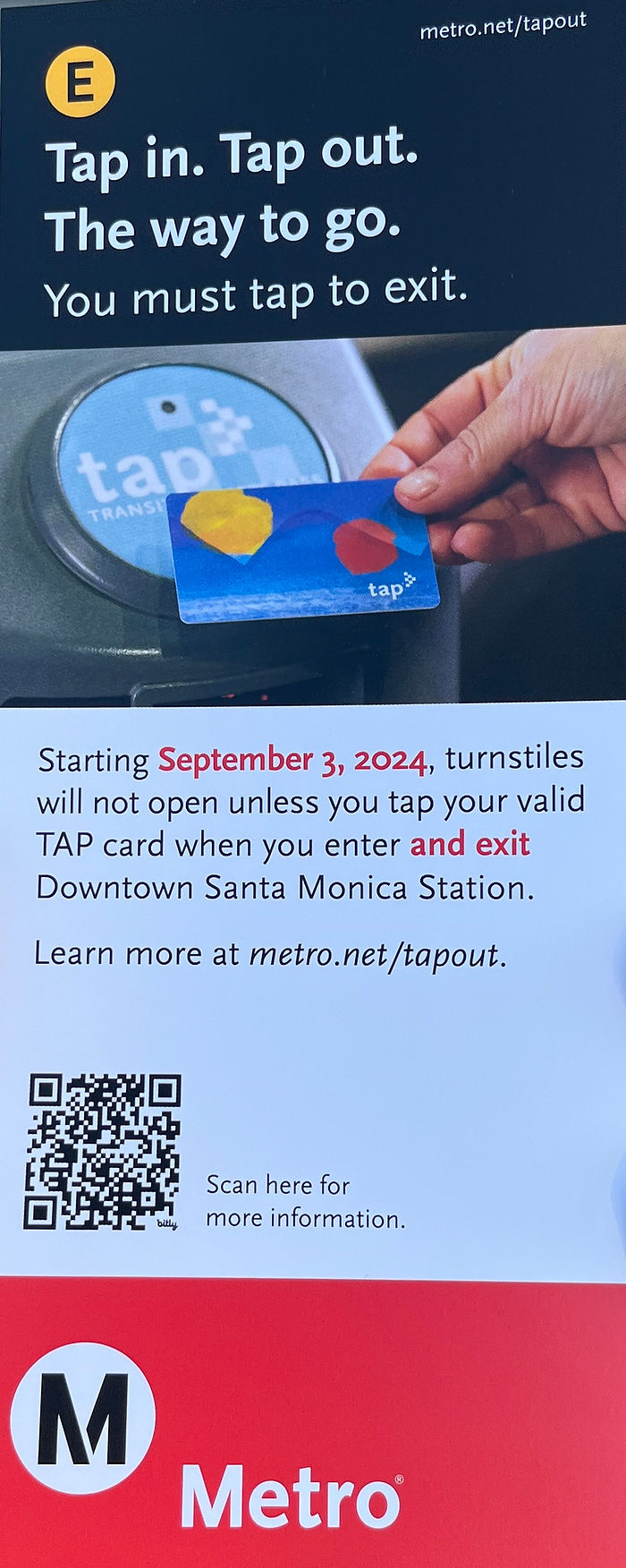
This is an really exciting moment for metro as they follow through on their commitment to develop Los Angeles’ transit system into a world-class one. Fare gating is a common practice in many other systems, such as BART in the Bay Area and JR in Japan. As Metro enhances its services and customer experience, I can’t wait for the day transit is viable for all in Los Angeles.
News this week:
Taken from Joe Linton’s Streetsblog Article
Ongoing – Metro recently entered phase 2 of C (Green) Line overhead wire rehabilitation. Metro warns riders to expect delays, including during a 8/25-31 bus bridge at the east end of the line (Norwalk to Long Beach Boulevard). Additional information is at The Source.
Wednesday 8/28 – Metro will host a 6 p.m. virtual community meeting for its North County 5 Freeway expansion project, focused on construction impacts. Details at Metro event page.
Thursday 8/29 – Metro will hold one additional in-person community for its proposed 605/5/10/60/105 Freeway expansion, called the I-605 Corridor Improvements Project (605CIP). Find a recent 605CIP community meeting recap at SBLA. The meeting will take place from 6-8 p.m. at San Angelo Park at 245 S. San Angelo Avenue in Avocado Heights, near the city of La Puente. Details at Metro event page.
Until next time stay tuned and stay cool! 🌳
What are those yellow dots on the edges of sidewalks?
- Jun 24, 2024
- 5 min read
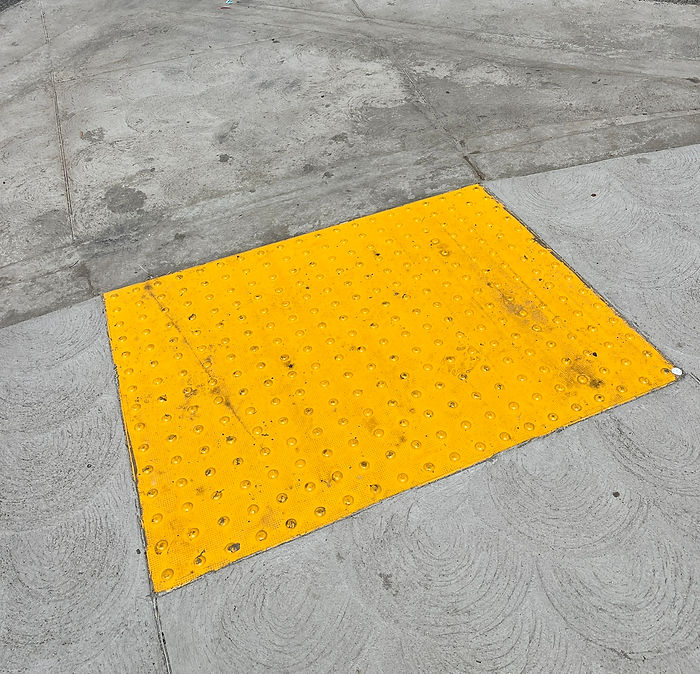
Have you ever noticed those yellow dots on the edges of sidewalks
and wondered what they are? Well, they are known as tactile paving, and they are an important role in making our urban environments more accessible and safe for everyone.
The Importance of Tactile Paving
Tactile paving, also known as detectable warnings or truncated domes, is a vital feature in public spaces designed to aid visually impaired individuals. These textured ground surfaces provide tactile cues that can be detected underfoot or by cane, allowing people with vision impairments to navigate safely. The importance of tactile paving extends beyond its primary function of enhancing mobility and safety; it represents a commitment to inclusivity and equal access in urban planning.
For many visually impaired individuals, tactile paving is an lifeline that allows them to move independently in city spaces. It helps them identify important landmarks, such as pedestrian crossings, changes in elevation, and potential hazards. They gain increased independence that significantly improve their quality of life, enabling them to participate more fully in life and community activities as well as gaining social mobility.
A Brief History of Tactile Paving
The concept of tactile paving originated in Japan in the 1960s.
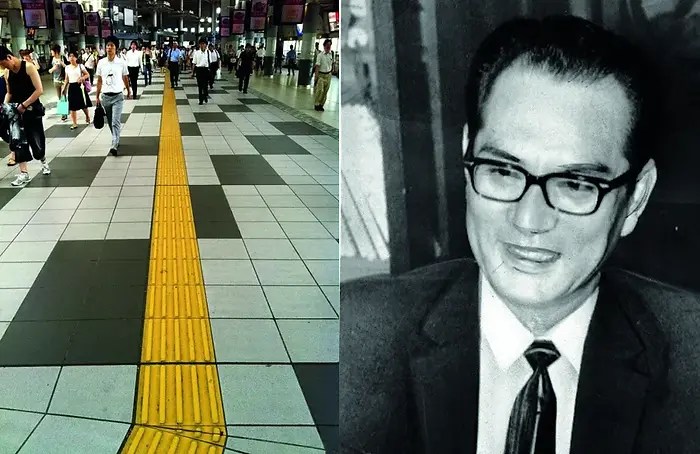
Seiichi Miyake, a Japanese engineer, invented tactile paving to help a friend who was gradually losing his sight. In 1967, Miyake installed the first tactile blocks near a school for the blind in Okayama City. His innovative design quickly gained recognition for its effectiveness, leading to widespread adoption throughout Japan.
By the 1980s, tactile paving had become a standard feature in many Japanese cities. Its success in Japan inspired other countries to incorporate similar designs into their urban infrastructure.
Today, tactile paving is now standard worldwide, from megacities such as New York and London to smaller towns and cities. This global adoption highlights the universal need for accessible design and showcases the impact of Miyake’s pioneering work.
Types and Uses of Tactile Paving
Tactile paving comes in various patterns and textures, each serving a specific purpose:
- Blister Paving: These raised dots are commonly found at pedestrian crossings. They signal the presence of a safe place to cross the street, alerting visually impaired pedestrians to the location of a crossing point.
- Corduroy Paving: Featuring parallel bars, corduroy paving warns of steps, slopes, or other changes in elevation. This helps prevent accidents by indicating that caution is required.
- Lozenge Paving: Found at platform edges in train stations, these tiles feature a lozenge-shaped pattern that indicates the proximity of a dangerous drop, helping to prevent falls onto the tracks.
Each type of tactile paving plays a crucial role in creating a safer and more navigable environment for visually impaired individuals. By providing clear, tactile signals, these pavements help ensure that public spaces are accessible to everyone.
How Other Cities Implement Tactile Paving
Different cities around the world have adopted tactile paving in various ways, often tailoring its implementation to meet local needs and conditions.
Tokyo: Tokyo is renowned for its extensive and meticulous use of tactile paving. The city ensures that all major pedestrian routes, train stations, and public buildings are equipped with these tactile indicators. This comprehensive approach sets the standard for accessibility and reflects Tokyo’s commitment to creating an inclusive urban environment.
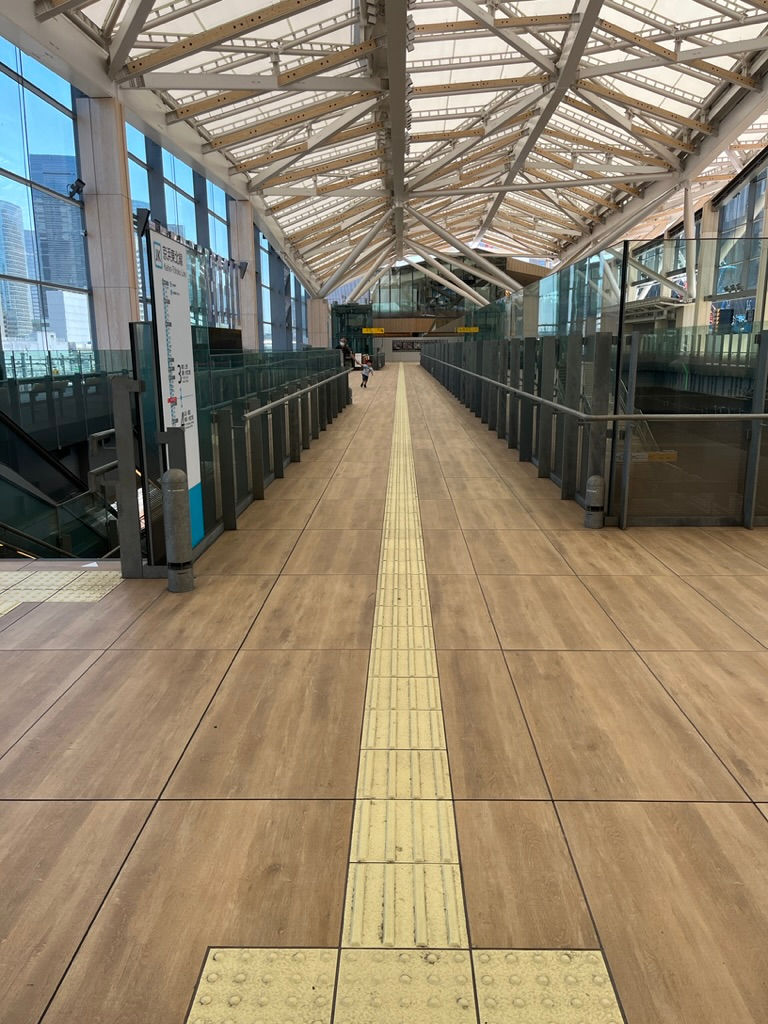
In Tokyo, tactile paving is not only present on sidewalks and at crossings but also inside train stations and public buildings. This extensive use makes it easier for visually impaired individuals to navigate the city independently. The city’s commitment to maintaining and upgrading its tactile paving infrastructure ensures that it remains effective and reliable.
New York City: In New York, tactile paving is widely used at subway stations, street crossings, and public buildings. The city’s Department of Transportation has implemented guidelines to ensure that tactile paving is installed correctly and maintained regularly. This focus on maintenance is crucial, as worn or damaged tactile paving can lose its effectiveness.
London: London has also embraced tactile paving as part of its urban design. The city uses various types of tactile surfaces to guide visually impaired pedestrians through busy streets, parks, and public transportation hubs. London’s approach includes extensive public education campaigns to raise awareness about the importance of tactile paving and how to use it effectively.
These cities demonstrate how thoughtful design and consistent maintenance of tactile paving can create more accessible and inclusive urban environments. By learning from these examples, Los Angeles can improve it’s own accessibility infrastructure.
Why Tactile Paving Matters
Tactile paving is not just about sidewalks. For visually impaired individuals, it provides important information that enhances their ability to navigate public spaces safely and independently. This increased mobility allows them to participate more fully in society, reducing the risk of isolation and improving their overall quality of life.
Tactile paving benefits everyone, not just those with visual impairments. It serves as a constant reminder of the need for inclusive design and promotes greater awareness and understanding of accessibility issues among the general public. By prioritizing tactile paving, we can create safer, more inclusive and more equal sidewalks and open up greater mobility for people of all ages and backgrounds.
Investing in tactile paving also has broader social and economic benefits. Accessible public spaces are an great equalizer in urban life, benefit users of public transit and contribute to the overall attractiveness and functionality of urban areas. With that, tactile paving represents a smart, forward-thinking investment in the future of mobility.
Locally in Los Angeles
Sidewalks have a complicated history here as there have been many different events in the history. With a focus on 4 main events.
- 1990 The US Government publishes the Americans with Disabilities Act of 1990″ which is an civil rights law that was created out of the hard work of advocates finally bringing accessibility to all.
- 2010 Willits v. City of Los Angeles
- 2015 Los Angeles Mobility Plan 2035
- 2017 “Fix and Release Plan”
*These events will all have an article each dedicated to them
Get Involved and Make a Difference
Seen damaged or missing tactile paving? Report it! Show up to local council member meetings and make a public comment, reply to this blog post, or use your cities 311 App (if you are in the US). Your reports can help ensure that necessary repairs and improvements are addressed promptly.
Join the conversation! View the upcoming city council meeting here ( Jun 25, 2024 10:00 AM (LA) and advocate for more comprehensive pedestrian oriented plans. Your voice can help influence decisions and ensure that accessibility remains a priority.
Funding matters: Attend city meetings discussing funding for accessibility improvements and ensure tactile paving is a priority. Advocate for budget allocations that support the installation and maintenance of tactile paving in all public spaces. You can check that out on their meeting page (LA)
Learn more: Understand the impact of tactile paving and how you can support local initiatives for better accessibility. Attend workshops, participate in community meetings, and educate yourself about the importance of inclusive design. You can sign up on Streetsforall’s Newsletter for LA area news on important safe streets discussions. Alternatively, you can check out Streetsblog’s ( Today’s Headlines) for anything safer streets in the USA.
By understanding and supporting the implementation of tactile paving, we can make our city a safer, more inclusive place for everyone. Accessible design is not just a nice-to-have; it’s a fundamental aspect of creating communities where all individuals can thrive. We can ensure that our sidewalks and public spaces are welcoming and navigable for an better pedestrian experience for all.🌳
Welcome to Safer Sidewalks!
- Jun 8, 2024
- 2 min read
We will be launching today as a new blog on how everyone should appreciate all the work sidewalks do for us!
I am your host, Nicholas De La Torre and I will be writing bi-weekly (sometimes more! Schedule could change due to being a student in high school.) about topics that interest me mostly within urban advocacy. Topics such as Safe Streets, Mobility, Housing & much more. This blog is centered in news & issues within the local Los Angeles area based in Sawtelle. Sometimes I will cover news from Japan and other countries about interesting strategies on better cities and transit!
Who Am I?
I am Nick A High Schooler based in the westside of Los Angeles, who is obsessed with sidewalks and the pedestrian experience.
My interest in transit existed ever since I was little kid, I always thought buses were a cool way to get around (since I rode them so often to get to school). The real point that got me into urban advocacy was the opening of the Expo Line to Santa Monica in 2016, suddenly I had access to a train in my neighborhood!
One day I stumbled upon the awesome LA Metro Discord server where they discuss everything LA Metro and instantly joined. I learned a lot about the way Los Angeles the city was built from the PE red cars all the way to today’s light rail from Ethan N. Elkind’s book “Railtown” and Alissa Walker’s excellent blog Torched has served as an inspiration to start writing, leading to me eventually establishing this blog!
What to expect?
Informative and analytical articles about issues regarding you guessed it (sidewalks!) and other transportation related subjects. Land use, Mixed-Use development etc.
Our main focus will focus on issues of sidewalks and pedestrians in Los Angeles, sometimes about other cities (Tokyo) and what are they doing and what could we do? type of open-ended comparisons.
This will all be free because information is best communicated that way and I believe everyone should have access to these articles!
Types of Content?
Newsletter: Blogs sent straight to your inbox!
Blog: The main source of news and where we write the main stories of the week or break down a particular story or subject.
Article: Summed up versions of blogs and topics covering things not within the usual topics (such as tech, photography etc)
Mini- Posts: Not full blogs about certain subjects, just a small write-up about a new thing that just happened. (for example, writing about key votes at the LA Metro board meetings (things that are of interest but not for a full article)
News: Any interesting short 2 paragraph news analysis we find to discuss here.
*blogs will be on an bi-weekly schedule ie. every 2 weeks, sometimes with articles in between.
Thank you for reading and I hope to see you on the next one!
 Home | Safer Sidewalks